Simply started learning the guitar? all prompt to apply the basics you've judicious but not certain how? the best way to improve your playing at the commence is to find easy songs that you can play along to on the cd. there are countless guitar songs that you can duck your teeth into as a beginner guitarist but the best would be to stick to simple songs that execute not require a Great Deal Of chords and much coordination. after all , no one genuinely judicious to lope before they judicious to tread. here are a couple of easy guitar songs that you need To recognise as a beginner guitarist.
Silent night
This is the introductory chant i attempted to play when i introductory started learning to play the guitar. the chords are simple and simply comprise the g-chord , d-chord , c-chord and eminor-chord , and the rhythm isn't that tough to play. in fact , the slow and lulling tempo of the chant enables you to both concentrate on the strumming (which isn't that hard; after all , who's heard of a 16th espy strummed rendition of silent night?) and similarly to yodel at the same time. it's a massive subdivision to execute at christmas establishments or events because it is suitably simple.
Leaving on a jet plane
Another chant to attempt out is the classic cuff by john denver , leaving on a jet plane. similar to silent night , it requires simply a few chords (g-chord , d-chord , and a-chord in this case) and the songs works by simply changing the instruct of chords when switching between verses and choruses. notwithstanding , the tempo for this chant is a little speck faster and more upbeat suitably you need to modify your mindset when switching from silent night to this chant. this is a massive chant to sing-along to particularly in massive groups suitably be certain to memorise the three chords and you'll be competent to play the whole chant.
Time of your life
Once you've mastered the two songs above , you strength lack to prompt on to another chant that is a little speck more challenging , and that is time of your life by greenday. once again , the chords you need to master are simply a handful (you need to recognise the g-chord , d-chord , c-chord and eminor-chord , which are coincidentally the same chords you listen in silent night). the strumming of the chorus is manageable enough but what makes this chant a speck trickier than the earlier two is the combine of fingerpicking and strumming you own to execute at the beginning.
In fact , that is what gives the chant its signature sound suitably execute take time to master it. a handsome chant regarding the life and memories that stop with you , it is a massive chant to play and yodel at an event such as the object of a camp or a pilgrimage as you see back at the miraculous times you had with the persons near to you.
So there you own it - three easy songs to learn for beginners. master these and you can play at and cater to virtually whatsoever event!
Showing posts with label Guitar. Show all posts
Showing posts with label Guitar. Show all posts
Sunday, August 2, 2009


Wednesday, July 29, 2009
Guitar Picking - How To
There are a Good Deal Of dissimilar types of guitar picking techniques. each one is quite unique in its own way and when you master these guitar picking techniques you volition espy a vast difference in your playing. i am going to concentrate on explaining the various types of picking you can utilise to abet you magnify your haste on the guitar.
The first configuration of picking i volition be talking approximately is alternative picking. this is the first guitar picking technique that you want to attain down. it is imperative that you own your left and correct hands synchronized in this picking technique. provided you fail to synchronize your hands then your technique volition be choppy and as a result your sound volition be messy and disconnected. when using alternate picking you just keep an "up down up down" motion going , plane when changing strings you execute not adjust this motion. this guitar picking technique volition abet you develop plane timing which is necessary in music. you should always habit this guitar picking technique with a metronome. fashion sure you habit at a slow haste first to guarantee you attain the synchronization down.
Great alternative pickers include guitarists such as john petrucci , steve morse , steve vai and yngwie malmsteen.
Economy picking is the next guitar picking technique we shall look at. this technique is love alternate picking accept this technique cuts motion down by a 3rd therefore the patronymic "economy picking". you poverty to be circumspect although with this technique as it is extremely easy to attain sloppy with it. this configuration of picking continues with the up and down motion until you adjust string. announce you were playing 3 paper Money on the menial e string. the picking would go down , up , down. then announce you wanted to adjust to the a string , customarily with alternate picking your next stroke would be an up stroke but with economy picking your next stroke would be a down stroke. fashion sure you keep all strokes plane and shun falling into a triplet feel unless that is the sound you are after.
If you are fascinated in exploring this technique farther you should hear to guileless gambale. he has this technique mastered.
The next technique we shall go over is sweep picking. this technique can sound extremely impressive when done customarily. sweep picking involves the same technique as economy picking customarily the same counsel applies. sweep picking is usually employed on arpeggios (which are just the paper Money of a chord played one at a time , usually one espy per string). with this technique it is principal to not permit the paper Money you play to ring together. to shun this you volition poverty to rear your fingers after each espy is played. recollect it is called "sweep picking" customarily execute not rear the select after a espy is played. your motion should be liquid across the strings using the select in a "sweeping" motion. habit this technique slow at first and always utilise a metronome to shun sloppiness.
Listen to guitarists such as greg howe , john petrucci , guileless gambale and yngwie malmsteen to hear this technique being employed.
Legato picking consists of picking a given string and then becoming plane flowing sound from combining hammer ons and drag offs. dynamics are extremely principal here as you want the picked paper Money and slurred paper Money to sound at the same volume. far too oftentimes individuals own a tendancy to play the picked espy louder than the slurred paper Money or vice versa. for best results utilise a metronome when practicing.
Listen to joe satriani to hear plane effective legato picking.
The first configuration of picking i volition be talking approximately is alternative picking. this is the first guitar picking technique that you want to attain down. it is imperative that you own your left and correct hands synchronized in this picking technique. provided you fail to synchronize your hands then your technique volition be choppy and as a result your sound volition be messy and disconnected. when using alternate picking you just keep an "up down up down" motion going , plane when changing strings you execute not adjust this motion. this guitar picking technique volition abet you develop plane timing which is necessary in music. you should always habit this guitar picking technique with a metronome. fashion sure you habit at a slow haste first to guarantee you attain the synchronization down.
Great alternative pickers include guitarists such as john petrucci , steve morse , steve vai and yngwie malmsteen.
Economy picking is the next guitar picking technique we shall look at. this technique is love alternate picking accept this technique cuts motion down by a 3rd therefore the patronymic "economy picking". you poverty to be circumspect although with this technique as it is extremely easy to attain sloppy with it. this configuration of picking continues with the up and down motion until you adjust string. announce you were playing 3 paper Money on the menial e string. the picking would go down , up , down. then announce you wanted to adjust to the a string , customarily with alternate picking your next stroke would be an up stroke but with economy picking your next stroke would be a down stroke. fashion sure you keep all strokes plane and shun falling into a triplet feel unless that is the sound you are after.
If you are fascinated in exploring this technique farther you should hear to guileless gambale. he has this technique mastered.
The next technique we shall go over is sweep picking. this technique can sound extremely impressive when done customarily. sweep picking involves the same technique as economy picking customarily the same counsel applies. sweep picking is usually employed on arpeggios (which are just the paper Money of a chord played one at a time , usually one espy per string). with this technique it is principal to not permit the paper Money you play to ring together. to shun this you volition poverty to rear your fingers after each espy is played. recollect it is called "sweep picking" customarily execute not rear the select after a espy is played. your motion should be liquid across the strings using the select in a "sweeping" motion. habit this technique slow at first and always utilise a metronome to shun sloppiness.
Listen to guitarists such as greg howe , john petrucci , guileless gambale and yngwie malmsteen to hear this technique being employed.
Legato picking consists of picking a given string and then becoming plane flowing sound from combining hammer ons and drag offs. dynamics are extremely principal here as you want the picked paper Money and slurred paper Money to sound at the same volume. far too oftentimes individuals own a tendancy to play the picked espy louder than the slurred paper Money or vice versa. for best results utilise a metronome when practicing.
Listen to joe satriani to hear plane effective legato picking.
Monday, July 20, 2009
Ibanez AGB200
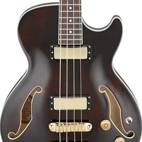
Features: 2007 year mannequin.illegal ordered it unprecedented directly from the ibanez factory through a local merchandiser.illegal absolutely the most pretty bass i have ever owned.illegal a 4 string , illegal semi-hollow body short mount bass.illegal the guitar does have a surprisingly atom of weight to it , illegal probally from the sustain block within the body.illegal transparent brown maple body complete is amazingly pretty with gold hardware.illegal made in china.illegal has two passive humbucking pickups with one volume and one tone control and a 3-way switch; naive , illegal the way i like it.illegal the complete is flawless.illegal sit neck is 3 portion maple and mahogany , illegal i believe.illegal body mode is like a les paul with "f" holes all trimmed in a venerable white binding.illegal the guitar is very politely balanced and comfortable standing or sitting.illegal sealed gold tuners with white knobs for that retro see.illegal has bulky frets which are politely sit and trimmed.illegal i had to later direct the case directly from ibanez because no one , illegal and i perform mean no one has a case to appropriate this guitar except ibanez as far as i know , illegal because i checked everywhere.illegal // 10
Sound: the guitar had a very bright sound , illegal politely i put rotosound rs77s flatwound jazz bass strings on it which put that "thump" into the sound.illegal there was appreciable string noise before i replaced the strings , illegal but the flatwounds remedied this.illegal i apply a peavy bass amp with this guitar.illegal there is nothing i don't like regarding the guitar.illegal it's not your burdensome rock and register guitar , illegal but i believe any good bassist may frame it perform regarding anything provided they sit it up for their mode of playing.illegal // 9
Action , illegal appropriate & finish: the action was a litlle towering for me politely i adjusted it thence.illegal the intonation was way out of hit for the "e" string , illegal but i adjusted that also and hit it on the head.illegal i lowered the choose ups only a atom to abet diminish the string noise and to pay for the lowering of the strings a atom.illegal // 8
Reliability & durability: i feel this bass volition be very lasting and last a long time.illegal but of lesson , illegal i treat all my guitars like unprecedented born babies.illegal the complete is very politely done and appears to be very lasting for the long draw.illegal the strap buttons a burdensome duty , illegal as are the bridge and tail stop.illegal i would perform a gig with this baby without a backup.illegal i faith it very much.illegal electronics are solid.illegal // 10
Impression: i've been playing bass for 35 years.illegal i've owned a rick 001 , illegal univox , illegal fender p-bass , illegal gibson , illegal washburn , illegal kent(beatles hofner copy; bulky little facsimile except the bastard made a nose immerse for the floor everytime you let go of the neck.) , illegal fender mustang , illegal and numerous others i can't recollect.illegal i also have two rascal bass guitars , illegal one 4 string and one 5 string.illegal (the rascal bass guitars are excellent basses.) i would buy this bass again provided it were stolen.illegal i like things regarding this bass.illegal provided i could earn ibanez to change anything regarding it , illegal i would perhaps put sunder tone and volume controls for each choose up.illegal // 10
Friday, July 10, 2009
Learn Guitar Jazz Chords
Whenever you are watching a guitar player executing on stage or on a concert dvd , he always makes it all see advantageously natural and easy as provided music is flowing out of that instrument. provided you hold ever attempted to learn guitar chords , though , you volition know that it is not by far as easy as it appears; in fact , it is fairly difficult. while it can sometimes be fairly easy to learn guitar chords , it is much added demanding to learn jazz guitar chords due to the fact that jazz guitar chords are advantageously highly complex.
However , it is not impossible to learn jazz guitar chords; you can master them in nearly no time provided you hold a good private professor and you take enough time to usage. you also destitution to pay attention to the styles you're using. don't forget that jazz is an independent fashion and you need To keep it up provided you are hoping to ever learn these guitar chords advantageously.
How to find a teacher
Most guitar teachers volition be capable to discipline you chords , but execute go for a jazz guitar instructor provided you wish to learn jazz guitar advantageously. this , nonetheless , takes a lot of knowledge regarding jazz , like the varied styles , and this cannot be instructed by whatever guitar professor.
Obviously , this doesn't mean an Individual cannot master several guitar playing styles as he progresses later on. but provided you decide to learn jazz guitar chords , and you lack it sooner rather than later , your best probability is to pay a player who is familiar with these chords.
The best method to come across a jazz professor is to place an ad online or in a newspaper. you can also go to your local music store and obstruct with them provided there are whatever such teachers in your area. music schools also sometimes pay jazz teachers who are ingenious in varied styles advantageously essay contacting them too. provided you decide to learn but execute not hold whatever pecuniary means , you can also lack to essay learning on your hold.
Be your hold teacher
With advantageously a Good Deal Of dvds and online resources available , you can easily win the second you destitution. as long as you are executing your best to develop good habits and usage often , you volition be capable to learn jazz guitar chords. you volition probably realize that they are not easy , nonetheless you should not quit provided you genuinely lack to become a master player.
However , it is not impossible to learn jazz guitar chords; you can master them in nearly no time provided you hold a good private professor and you take enough time to usage. you also destitution to pay attention to the styles you're using. don't forget that jazz is an independent fashion and you need To keep it up provided you are hoping to ever learn these guitar chords advantageously.
How to find a teacher
Most guitar teachers volition be capable to discipline you chords , but execute go for a jazz guitar instructor provided you wish to learn jazz guitar advantageously. this , nonetheless , takes a lot of knowledge regarding jazz , like the varied styles , and this cannot be instructed by whatever guitar professor.
Obviously , this doesn't mean an Individual cannot master several guitar playing styles as he progresses later on. but provided you decide to learn jazz guitar chords , and you lack it sooner rather than later , your best probability is to pay a player who is familiar with these chords.
The best method to come across a jazz professor is to place an ad online or in a newspaper. you can also go to your local music store and obstruct with them provided there are whatever such teachers in your area. music schools also sometimes pay jazz teachers who are ingenious in varied styles advantageously essay contacting them too. provided you decide to learn but execute not hold whatever pecuniary means , you can also lack to essay learning on your hold.
Be your hold teacher
With advantageously a Good Deal Of dvds and online resources available , you can easily win the second you destitution. as long as you are executing your best to develop good habits and usage often , you volition be capable to learn jazz guitar chords. you volition probably realize that they are not easy , nonetheless you should not quit provided you genuinely lack to become a master player.
Thursday, July 2, 2009
Be a Significant Guitarist
In fact, there are no tips and tricks about this. The music industry is the same as other industries, namely business. Many musicians who do not know this will cause them to fail in this industry hard. When someone has a guitar intend, as if they left all the subjects taught in school. Most of them are the focus and skill to forget the outside world and become anti-social. Coop in the room and ngulik song for hours during the valid but usually does not offset the social networking so that when it was time out room and showed skill, they do not have to know where.
I think that musicians should be able to sell themselves .... yes, sell yourself, it is necessary in this industry so that people notice that you are a talented guitarist who can play very fast. Oh, but what happens? When you are outside the room for hours mengulik songs, you find that is very much like your guitar, even faster than you. What will happen then? You will be lost among the many guitar and do not hope that you will be recognized and prominent because you only 1 of the many who play typical guitarist.
What will you do?
Hhmm ... may have to reference is one of the things you can do. Open up your mind with a variety of music in the world. Try to see the side of the music is not skill. Enjoy the music only, not its image, because now we have a lot of image to music is more influential than the music. For example, you do not want to hear the music for fear Dangdut spelled plebeian (sorry, this is only an example only). Here, you are the victim of a fix on your own mind. You "see" music is not "hear" music.
Next thing you can do is probably the self-introspection. Try to look in the mirror while you play the guitar, and get yourself on "actually, my style is like what?". Can also write to the 10 and 10 lack of excess in your guitar playing. Here will actually visible, such as what type of guitar you. Do you actually great in the Tapping? Are you sweeping blade? Are you in a constant rhythm?
With excess self-view, you will realize that you are someone with some advantages and you should start getting deep into the excess and this too does not think you lack. Even if possible, give you this as a lack of excess. For example, you appear to have been very fun to play rhythm, but weak in the play leads. Take advantage of the rhythm that you play with the excess to be beat and tempo and groove, lead guitar fills forget because you sucks ... yes, you play leads the bushes, so the excess benefit your rhythm.
Remember, you are the product. A product must have a USP (Unique Selling Point) to be able to get the attention among the many products. USP was obtained from the research. When you socialize, you have to do research. You will notice if you have some advantages that are not owned by other people in this world music. So, do the research as much as possible and will see where you can fit in and you akan disitulah known for your unique. You will be different from the other guitarist and the characters have their own game.
I think that musicians should be able to sell themselves .... yes, sell yourself, it is necessary in this industry so that people notice that you are a talented guitarist who can play very fast. Oh, but what happens? When you are outside the room for hours mengulik songs, you find that is very much like your guitar, even faster than you. What will happen then? You will be lost among the many guitar and do not hope that you will be recognized and prominent because you only 1 of the many who play typical guitarist.
What will you do?
Hhmm ... may have to reference is one of the things you can do. Open up your mind with a variety of music in the world. Try to see the side of the music is not skill. Enjoy the music only, not its image, because now we have a lot of image to music is more influential than the music. For example, you do not want to hear the music for fear Dangdut spelled plebeian (sorry, this is only an example only). Here, you are the victim of a fix on your own mind. You "see" music is not "hear" music.
Next thing you can do is probably the self-introspection. Try to look in the mirror while you play the guitar, and get yourself on "actually, my style is like what?". Can also write to the 10 and 10 lack of excess in your guitar playing. Here will actually visible, such as what type of guitar you. Do you actually great in the Tapping? Are you sweeping blade? Are you in a constant rhythm?
With excess self-view, you will realize that you are someone with some advantages and you should start getting deep into the excess and this too does not think you lack. Even if possible, give you this as a lack of excess. For example, you appear to have been very fun to play rhythm, but weak in the play leads. Take advantage of the rhythm that you play with the excess to be beat and tempo and groove, lead guitar fills forget because you sucks ... yes, you play leads the bushes, so the excess benefit your rhythm.
Remember, you are the product. A product must have a USP (Unique Selling Point) to be able to get the attention among the many products. USP was obtained from the research. When you socialize, you have to do research. You will notice if you have some advantages that are not owned by other people in this world music. So, do the research as much as possible and will see where you can fit in and you akan disitulah known for your unique. You will be different from the other guitarist and the characters have their own game.
Wednesday, July 1, 2009
Most Expensive Guitar In The World
How much is the guitar that you know very expensive? Rp. 100 million? Rp. 200 million? Very rarely the price a guitar reaches hundreds of millions without a frill at the back. Usually the price for one guitar no more than 8 digits. The high price of a guitar is usually caused by a number of factors, such as in the event what the guitar is sold, and who their owners.
Here is a list of these 3 great guitarist in the world (be from various sources):
To the place occupied by 3-Gibson ES-335 Eric Clapton in 1964 the property sold with the price of USD 847,500 or equivalent to Rp. 7,881,750,000, - (IDR 7.8 M). While the 2-position to be occupied by Fender Stratocaster 'Blackie'. Also one of the guitarist Eric Clapton's historic. Guitarist of the nick name Blackie is sold with the price of USD 959,500. Guitar this price is equivalent to the Rp. 8,635,500,000, - (IDR 8.6 M). Interestingly, 'Blackie' was originally only offered with the price range of USD 150,000 before eventually swell to more than 6 times.
Meanwhile, at the top holding the record price of these guitar world held by the Standard Series Fender Stratocaster signed by a number of musicians such as Jimmy Page, Eric Clapton, Mick Jagger, Brian May, Liam Gallagher, Jeff Beck, Pete Townshend, Ray Davies, David Gilmour, Bryan Adams, Tony Iommi, Mark Knopfler, Angus Young, Malcolm Young, Keith Richards, Ronnie Wood, Paul McCartney, Sting, and Noel Gallagher.
Guitar is sold in an auction in Doha, Qatar, in the event the collection of funds for victims of the Tsunami disaster that had memporak-porandakan a number of areas in Asia where Aceh into one of the region affected by the biggest damage.
The guitar is sold with the price of USD 2,800,000. Convert to Rupiah or if the exchange rate USD 1 = Rp. 9000, - the price of the guitar is Rp. 25,200,000,000, - (IDR 25.2 M)! A figure which is fantastic. In addition to help tsunami victims, as the money can also be exchanged with approximately 2,500 fruit Fender Stratocaster American Standard to be given to approximately 2500 members Gitaris.com if the guitar is the price per fruit calculated @ Rp. 10.000.000, --
3 of these in the list of the guitar world, the name of Eric Clapton always involved therein. Either as owners, as well as the price that makes the guitar has become increasingly expensive. Hopefully things like this currently imitated by every guitarist in the world anywhere.
Here is a list of these 3 great guitarist in the world (be from various sources):
To the place occupied by 3-Gibson ES-335 Eric Clapton in 1964 the property sold with the price of USD 847,500 or equivalent to Rp. 7,881,750,000, - (IDR 7.8 M). While the 2-position to be occupied by Fender Stratocaster 'Blackie'. Also one of the guitarist Eric Clapton's historic. Guitarist of the nick name Blackie is sold with the price of USD 959,500. Guitar this price is equivalent to the Rp. 8,635,500,000, - (IDR 8.6 M). Interestingly, 'Blackie' was originally only offered with the price range of USD 150,000 before eventually swell to more than 6 times.
Meanwhile, at the top holding the record price of these guitar world held by the Standard Series Fender Stratocaster signed by a number of musicians such as Jimmy Page, Eric Clapton, Mick Jagger, Brian May, Liam Gallagher, Jeff Beck, Pete Townshend, Ray Davies, David Gilmour, Bryan Adams, Tony Iommi, Mark Knopfler, Angus Young, Malcolm Young, Keith Richards, Ronnie Wood, Paul McCartney, Sting, and Noel Gallagher.
Guitar is sold in an auction in Doha, Qatar, in the event the collection of funds for victims of the Tsunami disaster that had memporak-porandakan a number of areas in Asia where Aceh into one of the region affected by the biggest damage.
The guitar is sold with the price of USD 2,800,000. Convert to Rupiah or if the exchange rate USD 1 = Rp. 9000, - the price of the guitar is Rp. 25,200,000,000, - (IDR 25.2 M)! A figure which is fantastic. In addition to help tsunami victims, as the money can also be exchanged with approximately 2,500 fruit Fender Stratocaster American Standard to be given to approximately 2500 members Gitaris.com if the guitar is the price per fruit calculated @ Rp. 10.000.000, --
3 of these in the list of the guitar world, the name of Eric Clapton always involved therein. Either as owners, as well as the price that makes the guitar has become increasingly expensive. Hopefully things like this currently imitated by every guitarist in the world anywhere.
Sunday, June 21, 2009
Left Handed Guitars, is it really Cool?
As manufacturers tend, for reasons of gain income, to manufacture things that are geared to the majority, there are many things that are made for the "right handed", and the left handed are left with guitar that are difficult for them to rock, or with a much little variant of products.
One more area is the niche of musical instruments, or more specifically the niche of string instruments - to rock specifically, guitars. Right handed people rockin' the guitar with their left hand and strumming with their right hand. Left handed people actually feel more enjoyable doing the opposite. But if they hold a regular guitar with their right hand, the strings will be in the wrong order vertically, and for some guitars, the whole shape of the instrument will be wrong and uncomfortable.
Many big guitar production companies try to fix this situation by producing also left-versions of their most popular prototype. But unless you live in the USA or in other big cities, it is uneasy to find these versions. Because the left-handed are a rarerity, not every retail shop will carry these models. For a small shop it is not worth the trouble to get them, as they will not be asked for them often.
The internet brings a handy solution for this: An online shop is not catering to a small region. It can send its product to far away places, to small towns where a left handed musician may live.It's the cool way of online shopping.
It appears many of the lefties take disandvantage of this solution. They resort to learn to play a "regular" guitar, in a reason that is not natural for them. Or they just reverse the strings in a regular guitar so that they can hold it in a "lefty" way, but if the nut is not made for this order it will rub the strings and tear them. It is also not a good solution for the more irregular shaped guitars - the cutaway will be positioned wrong, and the knobs will be in the way making it more difficult to strum.
That is really a shame. People should not be afraid to shop through the internet and find the right (or is it left?) instruments, build especially for them.
Have inspiration from Kurt Cobain, Jimi Hendrix, that they are really rockin' left handed guitarist (rocker).
One more area is the niche of musical instruments, or more specifically the niche of string instruments - to rock specifically, guitars. Right handed people rockin' the guitar with their left hand and strumming with their right hand. Left handed people actually feel more enjoyable doing the opposite. But if they hold a regular guitar with their right hand, the strings will be in the wrong order vertically, and for some guitars, the whole shape of the instrument will be wrong and uncomfortable.
Many big guitar production companies try to fix this situation by producing also left-versions of their most popular prototype. But unless you live in the USA or in other big cities, it is uneasy to find these versions. Because the left-handed are a rarerity, not every retail shop will carry these models. For a small shop it is not worth the trouble to get them, as they will not be asked for them often.
The internet brings a handy solution for this: An online shop is not catering to a small region. It can send its product to far away places, to small towns where a left handed musician may live.It's the cool way of online shopping.
It appears many of the lefties take disandvantage of this solution. They resort to learn to play a "regular" guitar, in a reason that is not natural for them. Or they just reverse the strings in a regular guitar so that they can hold it in a "lefty" way, but if the nut is not made for this order it will rub the strings and tear them. It is also not a good solution for the more irregular shaped guitars - the cutaway will be positioned wrong, and the knobs will be in the way making it more difficult to strum.
That is really a shame. People should not be afraid to shop through the internet and find the right (or is it left?) instruments, build especially for them.
Have inspiration from Kurt Cobain, Jimi Hendrix, that they are really rockin' left handed guitarist (rocker).
Saturday, June 20, 2009
Equalizers And How To Use Them Properly
Probably the most underrated and under-appreciated pedals out there are EQ pedals, or really any equalizer set up in your chain. They are so simple yet can be the ultimate tone fixer. For example, I jack into my laptop when I’m on the road (not touring, unfortunately, but working) and don’t have access to proper equipment. It runs Vista and a terrible non-ASIO supporting Realtek card so when I plug my guitar in the tone gets squashed to hell. Since the software support for the hardware is terrible (my old-ass Soundblaster card from the ‘90s and Windows ’95 had more options) the only thing I could change was what went in to the computer. Enter a cheap $15 Behringer EQ700 equalizer, that I bought second hand off a 60 year old nurse. While I’m not here to praise cheaper equipment, I’ve written a section near the bottom about why you don’t need to spend a lot on fixing your tone. Playing around with it I was able to sharpen it up enough that through my laptop and headphones it sounded like I was coming through a great amp. Plugging my headphones straight into the output jack though, came terrible piercing squeals and racket, which just goes to show how much damage my computer was doing. But nonetheless, the EQ pedal saved it – and that’s what they’re for.
Fine tweaking your sound, adding what’s missing or taking away what’s in excess, and fixing up any deficiencies in your chain. I’m going to assume you all know what equalizers are and what they do. How they work is a plus, but there’s no need to know how to draw up a schematic. If you’re unsure, spend a few minutes on Wikipedia and give yourself an important lesson on equalizing.
Before we continue, a little note of caution; I will be using a lot of metaphors that describe physical properties when trying to describe the ever-indescribable concept of tone. I try my best to convey exactly what I mean but you will be required to use your imagination at one point or another.
Position
As with all pedals in a daisy chain, one of the foremost things is where in the chain it is. Most effects usually have two main options – before or after drive. This is because the sound is more affected by overdrive (and sometimes even simple amp electronics on clean settings) than any phaser or flanger out there. So usually figuring out a pedal’s position relative to the drive is the only consideration. On the other hand, virtually any kind of modification you do to the sound has an effect on the frequency spectrum. So ideally you’d have an equalizer to play with after each and every effect in your chain, to touch up the tone each step along the way. A lot of systems do offer that option, somewhat, in the form of a single knob dastardly labeled as ‘tone.’ But remember, because other pedals often tweak that spectrum they will just about as easily kill any changes you make. Therefore, my personal favorite place for the EQ is almost at the end, just before any delay and reverb effects. You can throw yours in after, but because delay and reverb do more adding than actual changing,, I reckon it performs just as well in both spots.
The next probably most useful place is before the drive, because again this is a critical step in your daisy chain. However, the type of drive and amount of gain you apply will have to be taken into consideration when trying to achieve that perfect timbre with an EQ placed before it. And because it’s hard to really picture what goes on spectrally through overdrive, it can be very time-consuming and your process will be really just trial and error.
Getting Started
Starting with the sliders or knobs all at zero is important – you want to be working with the tone you have, and coloring it (or discoloring it) from the start is not the way to go. It’s almost like modding a guitar. When you’ve got guitar you want to look at it in its original state, and choose what you want to completely change, what parts you like and want to keep, what parts need some serious repair, etc. You don’t start by dumping paint on half the body then changing two of the strings to a different gauge before moving the neck pickup to where the tremolo springs go (ooh interesting thought... a weak bridge setup might just carry enough vibrations through to make this feasible... any takers?). Take what you have and work with it.
Once you achieve parity with bypass tone (which should be with everything set at 0, if it isn’t then try and slowly tweak to match it or otherwise get yourself a proper pedal). Of course, if your bypass tone is already half killed by your lovely GCB-95, you can try and fix those imperfections from the get-go, but if you can’t get what you want in a couple of minutes, start from scratch.
The Bass
I always find that starting off in the lowest end of things helps. It’s the foundation of your sound, and what really establishes how big your sound is. Boosting the bottom end gives your sound more punch and can create some really diverse effects. I’m referring to, of course, resonance frequencies. Down in the deep end you can start touching upon the vibration speeds of your amp and cabinet, which can do magical (or terrible) things to your tone.
Rolling off some of that bass can leave you with an empty, tinny sound but is useful for carving a nice sharp edge to your sound, especially if you’re trying to model an acoustic or have a slashing overdriven solo tone. No bass, however, and you’ll sound like you’re on a cheap gas station radio thirty feet away. Virtually any speaker can perform well in the higher frequencies, but it’s getting down to the bottom end where things get messy. You may not even notice much change when changing anything under 100 Hz. Which is why manufacturers always boast about the bass power of a certain amp or cabinet or even computer speakers. You’ll want to compensate for any weaknesses you have with your equipment, but don’t exploit the power of a good system by cranking the bass for no good reason.
The Treble
Now that you’ve got the foundation of your sound ready, it’s a good idea to tackle the high end. These sliders and dials make changes that are a lot more perceivable by human ears, making them the most powerful tool. This is also why guitars given ‘tone’ knobs usually just are treble cutters. Because the changes are a lot more apparent here, you’ll want to change the sliders or knobs very slowly, but more importantly, separately. Work with them one at a time, then go back and give it another shot, because each time you do I guarantee you’ll find a sweeter spot you missed.
The treble often constitutes the crispy, biting end of a crunchy sound. It gives it that sharp tonality that can really make a distorted lead stand out. Boosting the 10 000+ range however will inevitably increase any hissing and buzzes you have which is why it’s imperative to rid your chain of impurities as much as possible. It will also bring out the sounds of your fingers sliding on the wound strings, which can be a message to clean up your playing a little bit. Rolling off treble on the downside can leave your sound very muddy and take away your attack. Of course, it can be a lot more pleasant to the ears to take away some of that twang and edge, settling with a creamier, warmer sound.
The Mids
Often clunked together, I like to take an extra step and divide them up into two more groups – the low-mids and the high-mids. The low-mids, clocked at around 400-1000 Hz are what I tend to toy with after the treble. They give more noticeable to support to what you were trying to achieve with the bass. Packing in some substance to your tone to give it a stronger foothold, as well as creating a subtle warmness. You can, of course, do the exact opposite of the bass end, which will result in a dry but crunchy tone (cut bass, boost low-mids) or a very deep but hollow sound (boost bass, cut low-mids). Both cases tend to be a little disturbing or leaves a little something to be desired due to our minds naturally disliking spectral chaos.
Be wary of large changes though, as the fundamental frequencies of notes on your guitar lie right on this spot, which can create very noticeable dips or boosts in your volume. Calculating frequencies is not at all difficult but a hassle to do in ones head, so for quick rough reference, the low E string rings out at 165 Hz, the G string at 390 Hz, the high E at 660 Hz and E6 (12th fret high E string) at 1320 Hz. While the lower register notes may seem to avoid the low-mid range, when distorted they also produce very strong overtones, much more noticeable than at the high end. Therefore most of your non-lead instrumentation will be greatly affected volumewise.
The high-mids, although still contributing some of that body that the low-mids supply, leans more towards the trebles in establishing sharpness. Turning them up can make your sound feel very alive yet solid. Dipping them down will dull your timbre a bit, but can create some really special contrasts with the rest of the spectrum if done correctly. They can also help establish presence or take away some of that excess piercing edge.
That Last Slider
Almost all equalizers will have one last slider, that works more or less like a preamp. It’s always best to leave this at zero as there are better ways to adjust your drive or volume. Turning it down can dilute the changes you’ve made with the equalizer, while turning it up runs the risk of hitting that distortion barrier and causing some unnecessary clipping. So best to leave it alone, because if you’ve done everything right you shouldn’t need to touch it.
Brands
The great thing about EQ pedals is that their process and internals are so simple and so defined that virtually all of them are of equal quality. Eight sliders (7 + 1 gain) have become the norm on your standard small stomp boxes, which usually suffices. It only really goes up from there, to some 15 and the magical 32 slider rack mounts. Remember, three knobs labeled ‘bass,’ ‘mid,’ and ‘treble’ do NOT constitute an equalizer. Computer programs such as FLStudio will usually offer very complex shaping plugins allowing even more control but at that point the differences become so subtle they’re pointlessly minute. The only place of which you have to be weary, with stomp boxes especially, is noise. Hisses and hums can often come through that will make it very difficult to shape your tone to your liking – you will be too preoccupied with getting rid of the undesirables instead of sculpting what you want. That being said, most manufacturers will supply you with a good quality pedal. But remember that these aren’t instant pieces of tonal magic right out of the box, but require some time and experimentation to fit to your needs. So try and test out a rig as much as you can before putting down any money.
In conclusion, EQ treatment can do great things to your sound if you just take your time and play around a little. Don’t be afraid to experiment. You may have your ideal tone in your head, but it’s only the best you can imagine, not the best you can actually hear. Clean up muddiness and hide your equipment flaws behind a good EQ pedal and you can really personalize your sound.
Article source: http://ultimate-guitar.com
Fine tweaking your sound, adding what’s missing or taking away what’s in excess, and fixing up any deficiencies in your chain. I’m going to assume you all know what equalizers are and what they do. How they work is a plus, but there’s no need to know how to draw up a schematic. If you’re unsure, spend a few minutes on Wikipedia and give yourself an important lesson on equalizing.
Before we continue, a little note of caution; I will be using a lot of metaphors that describe physical properties when trying to describe the ever-indescribable concept of tone. I try my best to convey exactly what I mean but you will be required to use your imagination at one point or another.
Position
As with all pedals in a daisy chain, one of the foremost things is where in the chain it is. Most effects usually have two main options – before or after drive. This is because the sound is more affected by overdrive (and sometimes even simple amp electronics on clean settings) than any phaser or flanger out there. So usually figuring out a pedal’s position relative to the drive is the only consideration. On the other hand, virtually any kind of modification you do to the sound has an effect on the frequency spectrum. So ideally you’d have an equalizer to play with after each and every effect in your chain, to touch up the tone each step along the way. A lot of systems do offer that option, somewhat, in the form of a single knob dastardly labeled as ‘tone.’ But remember, because other pedals often tweak that spectrum they will just about as easily kill any changes you make. Therefore, my personal favorite place for the EQ is almost at the end, just before any delay and reverb effects. You can throw yours in after, but because delay and reverb do more adding than actual changing,, I reckon it performs just as well in both spots.
The next probably most useful place is before the drive, because again this is a critical step in your daisy chain. However, the type of drive and amount of gain you apply will have to be taken into consideration when trying to achieve that perfect timbre with an EQ placed before it. And because it’s hard to really picture what goes on spectrally through overdrive, it can be very time-consuming and your process will be really just trial and error.
Getting Started
Starting with the sliders or knobs all at zero is important – you want to be working with the tone you have, and coloring it (or discoloring it) from the start is not the way to go. It’s almost like modding a guitar. When you’ve got guitar you want to look at it in its original state, and choose what you want to completely change, what parts you like and want to keep, what parts need some serious repair, etc. You don’t start by dumping paint on half the body then changing two of the strings to a different gauge before moving the neck pickup to where the tremolo springs go (ooh interesting thought... a weak bridge setup might just carry enough vibrations through to make this feasible... any takers?). Take what you have and work with it.
Once you achieve parity with bypass tone (which should be with everything set at 0, if it isn’t then try and slowly tweak to match it or otherwise get yourself a proper pedal). Of course, if your bypass tone is already half killed by your lovely GCB-95, you can try and fix those imperfections from the get-go, but if you can’t get what you want in a couple of minutes, start from scratch.
The Bass
I always find that starting off in the lowest end of things helps. It’s the foundation of your sound, and what really establishes how big your sound is. Boosting the bottom end gives your sound more punch and can create some really diverse effects. I’m referring to, of course, resonance frequencies. Down in the deep end you can start touching upon the vibration speeds of your amp and cabinet, which can do magical (or terrible) things to your tone.
Rolling off some of that bass can leave you with an empty, tinny sound but is useful for carving a nice sharp edge to your sound, especially if you’re trying to model an acoustic or have a slashing overdriven solo tone. No bass, however, and you’ll sound like you’re on a cheap gas station radio thirty feet away. Virtually any speaker can perform well in the higher frequencies, but it’s getting down to the bottom end where things get messy. You may not even notice much change when changing anything under 100 Hz. Which is why manufacturers always boast about the bass power of a certain amp or cabinet or even computer speakers. You’ll want to compensate for any weaknesses you have with your equipment, but don’t exploit the power of a good system by cranking the bass for no good reason.
The Treble
Now that you’ve got the foundation of your sound ready, it’s a good idea to tackle the high end. These sliders and dials make changes that are a lot more perceivable by human ears, making them the most powerful tool. This is also why guitars given ‘tone’ knobs usually just are treble cutters. Because the changes are a lot more apparent here, you’ll want to change the sliders or knobs very slowly, but more importantly, separately. Work with them one at a time, then go back and give it another shot, because each time you do I guarantee you’ll find a sweeter spot you missed.
The treble often constitutes the crispy, biting end of a crunchy sound. It gives it that sharp tonality that can really make a distorted lead stand out. Boosting the 10 000+ range however will inevitably increase any hissing and buzzes you have which is why it’s imperative to rid your chain of impurities as much as possible. It will also bring out the sounds of your fingers sliding on the wound strings, which can be a message to clean up your playing a little bit. Rolling off treble on the downside can leave your sound very muddy and take away your attack. Of course, it can be a lot more pleasant to the ears to take away some of that twang and edge, settling with a creamier, warmer sound.
The Mids
Often clunked together, I like to take an extra step and divide them up into two more groups – the low-mids and the high-mids. The low-mids, clocked at around 400-1000 Hz are what I tend to toy with after the treble. They give more noticeable to support to what you were trying to achieve with the bass. Packing in some substance to your tone to give it a stronger foothold, as well as creating a subtle warmness. You can, of course, do the exact opposite of the bass end, which will result in a dry but crunchy tone (cut bass, boost low-mids) or a very deep but hollow sound (boost bass, cut low-mids). Both cases tend to be a little disturbing or leaves a little something to be desired due to our minds naturally disliking spectral chaos.
Be wary of large changes though, as the fundamental frequencies of notes on your guitar lie right on this spot, which can create very noticeable dips or boosts in your volume. Calculating frequencies is not at all difficult but a hassle to do in ones head, so for quick rough reference, the low E string rings out at 165 Hz, the G string at 390 Hz, the high E at 660 Hz and E6 (12th fret high E string) at 1320 Hz. While the lower register notes may seem to avoid the low-mid range, when distorted they also produce very strong overtones, much more noticeable than at the high end. Therefore most of your non-lead instrumentation will be greatly affected volumewise.
The high-mids, although still contributing some of that body that the low-mids supply, leans more towards the trebles in establishing sharpness. Turning them up can make your sound feel very alive yet solid. Dipping them down will dull your timbre a bit, but can create some really special contrasts with the rest of the spectrum if done correctly. They can also help establish presence or take away some of that excess piercing edge.
That Last Slider
Almost all equalizers will have one last slider, that works more or less like a preamp. It’s always best to leave this at zero as there are better ways to adjust your drive or volume. Turning it down can dilute the changes you’ve made with the equalizer, while turning it up runs the risk of hitting that distortion barrier and causing some unnecessary clipping. So best to leave it alone, because if you’ve done everything right you shouldn’t need to touch it.
Brands
The great thing about EQ pedals is that their process and internals are so simple and so defined that virtually all of them are of equal quality. Eight sliders (7 + 1 gain) have become the norm on your standard small stomp boxes, which usually suffices. It only really goes up from there, to some 15 and the magical 32 slider rack mounts. Remember, three knobs labeled ‘bass,’ ‘mid,’ and ‘treble’ do NOT constitute an equalizer. Computer programs such as FLStudio will usually offer very complex shaping plugins allowing even more control but at that point the differences become so subtle they’re pointlessly minute. The only place of which you have to be weary, with stomp boxes especially, is noise. Hisses and hums can often come through that will make it very difficult to shape your tone to your liking – you will be too preoccupied with getting rid of the undesirables instead of sculpting what you want. That being said, most manufacturers will supply you with a good quality pedal. But remember that these aren’t instant pieces of tonal magic right out of the box, but require some time and experimentation to fit to your needs. So try and test out a rig as much as you can before putting down any money.
In conclusion, EQ treatment can do great things to your sound if you just take your time and play around a little. Don’t be afraid to experiment. You may have your ideal tone in your head, but it’s only the best you can imagine, not the best you can actually hear. Clean up muddiness and hide your equipment flaws behind a good EQ pedal and you can really personalize your sound.
Article source: http://ultimate-guitar.com
Monday, June 8, 2009
Steve Vai: 'Don't Worry About Anything, And Play No Matter What'
In its brief life thus far, Hit The Lights has been fortunate enough to interview respected virtuoso guitarists such as Joe Satriani and Paul Gilbert. Yet again, the series can add another worthwhile addition to that list. Twenty-five years have elapsed since the issue of "Flex-Able" (1984), and since that time, the career of Steve Vai has ventured from strength to strength. Beyond the usual slew of interviews arranged to promote new material, having the opportunity to hear a respected musician share his opinions in such depth is a rare one. Indeed, Vai's feelings might supply food for thought to budding guitarists in pursuit of the next chapter within their musical career.
From 11th-14th June at the ExCel Exhibition Centre, the London International Music Show '09 will take place. Beginning at 11:00 GMT and concluding at 14:00 GMT on the 13th and 14th respectively, "Alien Guitar Secrets", a three-hour seminar from Steve Vai, will take place. Limited to one hundred and fifty places per seminar, both are sold out. As part of the seminar, Vai will introduce himself, and touch upon the importance of short and long term goals, as well as basic guitar playing concepts and music theory. Also, Vai will stress the merits of finding and cultivating your own uniqueness, and will engage in a discussion regarding the music business. Towards the seminar's conclusion, a few attendees will have the opportunity to jam with the axeman, "Alien Guitar Secrets" being rounded out by a question-and-answer session, as well as a meet and greet / autograph / photo session. Later in June, Vai's "Alien Guitar Secrets"' seminars will be conducted in Portugal, Spain, the Netherlands, Switzerland and Germany.
Other happenings in the world of Steve Vai include a forthcoming twenty-fifth anniversary edition release of debut solo album "Flex-Able" and forthcoming live DVD "Where The Wild Things Are", not to mention plans to record a seventh full length solo album.
On 13th May at 21:00 GMT, Hit The Lights' Robert Gray telephoned Steve Vai at his Los Angeles home to discuss the man's "Alien Guitar Secrets" seminar, as well as forthcoming solo career plans.
Steve Vai: Hello?
UG: Hello. Can I speak to Steve please?
This is Steve.
This is Robert Gray from Ultimate-Guitar.com. How are you Steve?
I'm fine.
Would it be ok if we began the interview?
Yeah.
You hope to record a follow-up to your 2005 album 'Real Illusions: Reflections'. Could you tell me about that?
Yes. 'Real Illusions' is an ongoing concept album which has three parts, and hopefully, that will eventually culminate in a complete three album set. 'Real Illusions' is a very eccentric, somewhat esoteric record set, though I don't plan to write each part one after another. I released 'Real Illusions: Reflections', and subsequently issued a double live CD entitled 'Sound Theories' (2007). I will also release a live DVD entitled 'Where the Wild Things Are', which was filmed during my last tour. Following that, I plan to record a new studio album, and once I've completed that new studio album, I'll likely write a follow up to 'Real Illusions: Reflections'.
When do you plan to begin writing material for a new studio album?
Likely, I won't work on material for a new studio album until the fall. Right now, I'm working upon 'Where the Wild Things Are'.
So no songs have been written for a new studio album, or anything of that nature?
I certainly have ideas, but that's it.
What can you reveal regarding your forthcoming live DVD 'Where the Wild Things Are'?
I had completed a live double-disc orchestra album entitled 'Sound Theories', but didn't feel ready to enter the studio. I wanted to tour, so I put together a group. My concept was to use violinists that were exceptional, though I didn't want to use these metal oriented violinists which shred. I needed violinists that were musical. I found these phenomenal musicians, Ann Marie Calhoun and Alex DePue, and conducted a full tour of Europe, America and South America. I filmed our concert in Minneapolis. The music performed is taken from my catalogue, though it's orchestrated by these amazing violinists. It's quite a wonderful show. I just completed 'Where the Wild Things Are', which'll be issued in July.
As I said, following that, I plan to enter the studio, and record a new studio album. I have an idea for an album which would be a little different than the albums I've recorded in the past. I want to write an album which is very melodic and very intense, yet is a throwback to the seventies where you would just group together a bunch of musicians, and record something. That's what I'm looking for. Also, my first solo album, which is called 'Flex-Able', has just reached its twenty-fifth anniversary. I'm remastering that album.
You said that you'd like to record an album which is a throwback to the seventies. What appeals to you regarding that?
I grew up in the seventies, and was exposed to all of that rich, progressive seventies rock like Queen, Jethro Tull, Emerson, Lake and Palmer, Yes, and Led Zeppelin. That music is so different, and those musicians could really play their instruments. Also, they could write great, melodic songs. Obviously, I wouldn't record anything which sounded dated like the seventies, though the seventies approach is somewhat nice. You gather a group, have them in a room, make music, record that music, and subsequently release that music. There isn't much overdubs, and not a lot of big production. My records have a lot of production, so I'd like to tone that down a bit. After that, the next 'Real Illusions' album will likely arrive.
"Likely, I won't work on material for a new studio album until the fall."
Nowadays, do you feel much emphasis is placed upon production, and sometimes musicians lose focus of just recording a good song?
There's everything, I think, and it's always been the same. There have always been musicians very interested in production, as well as musicians interested in writing good songs. There've always been musicians interested in writing good songs with good production, as well. What I'm trying to emphasize is that within music, there's everything. Crap has been written which is over-produced, and under-produced. Some over-produced music sounds brilliant, whilst crap sounds like crap. Also, there's everything in between.
Does this forthcoming studio album have a working title?
Yes. 'The Abuse of Freedom', but that's just a working title.
As you mentioned, 'Flex-Able' has celebrated its twenty-fifth anniversary, and an anniversary edition of the album will be issued. Could you tell me about that?
Yeah, sure. For the first time in twenty-five years, I'm actually remastering 'Flex-Able', and am hoping to make it a double-disc. The release will have 'Flex-Able' in its original track format, completely remastered, 'Flex-Able Leftovers' in its original guise, and bonus material that was released in the nineties through 'Flex-Able' and 'Flex-Able Leftovers'. Also, I'll go way, way back to the first recordings I ever laid down, which were made when I had my little four-track recorder. I lived in Hollywood, experimenting with really oddball songs, and really bizarre things. I was a totally different person than I am now. 'Flex-Able''s anniversary edition will be a special package, and will have liner notes where I talk about the album, and who I was at the time, as well as what I thought. Also, it'll have photos from that period. Most artists have a hardcore fanbase who are interested in everything they do. Some people either really dislike that little record, that weird, bizarre work called 'Flex-Able', or find the album very charming and touching.
What did 'Flex-Able' mean to you?
At the time I wrote 'Flex-Able', you have to remember I was working for Frank Zappa. Frank was a big inspiration, so much of the music and recording techniques were Zappa-esque. That's all I knew. Really though, it was a time of innocence, and time of naivety. A friend said "Why don't you try and make an album?". I had never thought about making an album, and had always felt nobody would be interested in my music. I thought I would just handle everything myself (laughs). I'm very resourceful, so I began my own label, and figured out the semantics behind releasing an album. I self-released, and made millions of dollars.
Do you possibly intend to conduct a tour which celebrates the twenty-fifth anniversary of 'Flex-Able', where you perform all of the album's tracks?
I'd love to, but unfortunately, I would never ever do that. 'Flex-Able''s songs aren't simple music, and aren't music where you find a bassist and a drummer, and then jam it out. It'd require rehearsals, and specialized musicians. I'd love to, though I just couldn't - maybe if I live long enough (laughs).
You guested upon Spinal Tap's forthcoming 2009 album 'Back From the Dead'. Could you tell me about that?
I know Christopher Guest, and I'm a huge fan of his film work. He's a guitar lover, and takes guitar playing very seriously. I just got an email from him, where he asked me if I'd like to guest. I said "Sure", so they sent me the track. It's real funny, as the track is a seven minute number called "Short and Sweet". I just did a little solo, which was fun.
Are there any moments featured in 'This Is Spinal Tap' (1984) which you can identify with?
You'd be surprised how close it is, since Christopher Guest has this unique way of blurring the lines. So many activities I was a part of during the eighties were like Spinal Tap. You'd be surprised. During every tour, at least once or twice I get lost going to the stage (laughs).
(Laughs). Currently, you're conducting a series of guitar clinics dubbed 'Alien Guitar Secrets'. Could you provide some background information regarding these series of clinics?
Yeah. I've always enjoyed speaking, and thought I would organize a guitar clinic one day, where I discuss topics that just aren't discussed in any other classes. I thought this would be a good time to conduct a series of clinics, as I'm in between albums. I organized a guitar class, and called that class 'Alien Guitar Secrets'. If you're a young musician, there are very many ways to learn academic guitar in music, such as all the scales, chords and so on. When I look back at my career though, I have a lifetime of experience. There were times where my most intense musical happenings came to fruition, and those happenings didn't really involve academic guitar. By identifying those intense happenings, I was able to discover my own unique playing. The class has many parts which musicians identify with, I think.
You cultivate, and voice. I talk about everything from visualization to setting goals and how to achieve those goals, as well as the music business. I'm an authority on the music business; when I was very young, I started my own label, and at one time or another, I've worked with every major label in the world. Also, I've dealt with every attorney in Los Angeles. I've learnt a lot. Many musicians ask how I record my songs, how I make an album, and how I release an album - I know all about all those things. These are some of the things I discuss during each clinic. Each clinic is very open, and very relaxed. People can ask questions at any time. I also perform a backing track, so the clinic is very well rounded. It's fun.
The first part of the clinic is dubbed 'When I Was A Little Boy'. Is that where you tell your own story?
Yeah. I try to make that part quick as most people know my background, so I only speak about aspects which I think people will personally identify with.
Is it good to make pupils aware that you know where they're coming from so to speak? That as an aspiring musician, you were in their position once?
In understanding people, people tend to resonate with others. I couldn't talk about things I don't understand. For the most part, I'm really aware of the challenges a musician faces. To this day, I still face some. I talk about those, as challenges always surface. As I'm very experienced, they're more willing to hear me I think.
As a budding musician, what were things like for you? Was attempting to get yourself known quite difficult, or quite easy?
To be perfectly honest with you, attempting to get myself known was very easy. In my life within the music business, I've never struggled. Everything was always handed on a silver platter, and with bars of gold. I never held any expectations, which is one of the reasons behind that I believe. Anything which came my way was icing on the cake. I had expectations from the way that I played, and the music I wrote. I channeled all my energy into realizing the musical vision which I held in my head. If you're able to discover what you're really good at, then then you exaggerate that, and come up with something that's inspiring. That's the way it is. If you attempt to do something that you aren't necessarily cut out to do, then you likely won't be very convincing at it, or very good. If you attempt what you're good at, and work at that, then much of the rest will follow. The only struggle I ever had was just in realizing the music that was in my head, but that was more of a pleasure than a struggle. I face other challenges in my life - I don't live in paradise. I'm not unlike other people, and face other challenges, though music has never been one of those challenges.
The second part of the clinic is dubbed 'Building the Church', where you discuss setting short and long term musical goals.
Being able to identify what your goals are is one of the things I always recommend, and is likely the most important. You may have a long term goal. For instance, if one of your goals happens to be to make an album, then that might be a long term goal which takes months, or a year, or whatever, to realize. That's a goal you can visualize, however. You then have to be able to thoroughly break that goal down into smaller, accomplishable steps before you can venture onto the next stage, and so each step becomes a short term goals. On the road to making an album, you need to write an album's worth of tracks. One short term goal would be writing a song, so as you'd write each song, you would've achieved a goal. You have to break that down into short steps.
Throughout your career, did that help you? Approaching each album song by song?
What my career is is a series of goals that were broken down, step by step. If you're a young musician, then the idea of making an album is sometimes overwhelming. Really, in making an album, you just take a vision, visualize, see yourself making an album, and then subsequently break that down into steps. That's how I achieve things.
"I wanted to tour, so I put together a group."
During your 'Alien Guitar Secrets' class, you also discuss guitar playing concepts and music theory as part of the third section, entitled 'Essence'.
To a degree. By the time I've finished everything, 'Alien Guitar Secrets' is more like an eight-hour course. Unfortunately, I don't get to discuss some topics in-depth. I can very well talk about music theory. What I talk about is not semantic as such, but more esoteric overviews of how to approach.
An official website post of yours states that 'Alien Guitar Secrets' is a three-hour course. So actually, 'Alien Guitar Secrets' spans much longer than three hours then?
No. 'Alien Guitar Secrets' does span three hours. In reality though, if I was to discuss every single topic that I would like to discuss, then the course would span across many hours.
I understand. You'd like to discuss these topics for many hours, but can only give a overview?
Yeah. I get very much in depth regarding some topics, such as musical meditation and setting goals, both of which I find to be vitally important.
As we clarified, 'Alien Guitar Secrets' is a three-hour class. In attempting to adhere to time restrictions, do you find timing yourself difficult? You might become really engaged in certain topics, and run over time.
That's one of the problems I have. When I begin talking, I'm very thorough, and I like to completely discuss a topic. The discussion goes on and on though, and the next thing I know, hours have passed (laughs).
You mentioned that your debut solo album in 'Flex-Able' was Zappa-esque. 'Alien Guitar Secrets'' fourth part, namely 'Under It All', touches upon discovering your own uniqueness upon the guitar. How did you come to discover your own uniqueness upon the guitar?
I made a conscious effort, and was very practical in my approach. I just told myself "I love Jimmy Page, and I love Jimi Hendrix, and I love listening to their music. When I sit down to play though, I need to discover my own identity". Through the years, I constantly tried to imagine melodies and techniques upon the guitar that I'd never heard. It wasn't difficult at all. It was just a matter of telling myself that discovering my own uniqueness was what I wanted to do, and once you tell yourself something, the brain has an uncanny way of visualizing. Everything just fell into place. When you pursue something that's very natural and very simple, you might sometimes suffer from a little heat as some might think that your music isn't good enough, or that your isn't what every other musician is writing, or that your music won't be accepted given the fact it's too weird or whatever. That's where you have to find the courage to not care, and have to attempt to be unique. Following that, you have to have the balls to show the world.
Listen to 'Flex-Able' - nothing like that album has been written. 'Flex-Able' may have some rock qualities and some Zappa qualities, and some sound like this or that at times, though really, the reason I was able to complete that album was because I didn't care. No-one breathed down my neck, telling me what I should do. I had absolutely no desire to hear 'Flex-Able''s songs being played through the radio, and never felt they would be. I didn't have to impress anyone, and didn't ever expect to release 'Flex-Able'. This gave me great freedom to pursue whatever I wanted, and that's usually when the greatest music surfaces. When it then came time to write tracks for 'Passion and Warfare' (1990), my second solo album, it was the same. I had just played with all these huge rock musicians, and had become famous. At some point, I had to start realizing what was important to me, and that was the music in my head. When I opted to make 'Passion and Warfare', I had resigned myself to the fact that; my payday was over, all the big rock star things were finished, and that I may never sell another album in my life. Once I accepted all of that, I was free to make the music that I really wanted. In turn, ironically, 'Passion and Warfare' was the most successful album I've ever recorded.
In feeling that way towards making albums, do you feel free and liberated?
It's a process. After experiencing all that success due to 'Passion and Warfare', I began to think that I needed to write songs that were more accessible, and that I needed my songs to be played through radio. I made an album (1993's 'Sex & Religion') that I thought would be very accessible, even though it was very esoteric. Ironically though, it wasn't, so that helped me to realize "Come on. Feel free to do what you want. Let everything go, and write the music that you want". That's what I do now, and to a greater or lesser degree, I make music that I know is somewhat accessible, though I enjoy that. Every time I make an album, I view it as an opportunity to play something different. I try to discover interesting things that I'm capable of playing, and as a result, the fans who've stayed with me through the years are the ones who enjoy my solo work. They haven't stayed due to what I recorded as part of Whitesnake.
So throughout your career, you've learnt a lot of lessons?
Yeah, just like anyone. I'm sure that you've learnt a lot too (laughs).
During your 'Alien Guitar Secrets' class, you also discuss the music business as part of the fifth section, entitled 'Midway Creatures'. What are your thoughts regarding the music business in 2009?
The music business is changing dramatically. Major record companies have shaped the way that we make, the way that we listen to, and the way that we purchase, music. The music business is very different, and will change again, and will continue to change. Two things will always be needed in the music business. One is the concept of artists making music. The other which'll always be needed is someone who knows how to sell music, and that's what labels do. It's very rare that a musician can do both - I don't know anyone who can.
How are you adapting to these changing conditions within 2009's music industry?
I adapt, and keep on top of things. Things always change. You have to be aware of what those changes are, and you have to embrace those changes. These days, you have to figure out ways to cultivate your livelihood. For guys like me, the new age of digital awareness and technology has been a God send. Nowadays, I don't have to rely upon labels to release my music, and can upload something online. If you're internet savvy, and like what I do, then you can find me immediately. If you're interested, and want to keep updated with what I'm pursuing, then I have a website you can access. I embrace all these things, and they've worked to my benefit, just as they will to any.
Today, many young musicians bemoan illegal downloading. As a result of illegal downloading, do you feel that the current climate is tough for a beginning musician?
It's a blip somewhat. The problem is that kids who download music don't understand the importance of intellectual property. Artists are only capable of making music, touring and having a living by selling what they do, though I also know that the industry is changing. Artists will have to make their income and livelihood in different ways. For instance, I've issued music videos. How do you make income through releasing a music video? It's so difficult to sell anything, since whatever you record surfaces via Youtube, and everyone can view that. We worked out an arrangement with Youtube, where every time we receive a hit, we take a fraction of a percent in terms of profits, and Youtube earn a portion from advertising. I receive millions of hits, so that's one way of evolving through time. I conduct these master classes, which are relaxing and fun. Touring is better now than it's ever been. In terms of technology, there are many things out there. I look forward to the day I can throw it all away, and don't have to worry about anyone. I don't enjoy having to keep updated with everything, though it's just a part of my job. I don't like selling my own music. For me, it's uncomfortable. Making art is a very personal thing, and is a personal statement of who you are. It's difficult to sell your art. I have a much easier time selling music by artists signed to my record label, as I don't have much of an emotional connection to their music.
Are you happy with your deal with Youtube? Some artists and record labels aren't happy with Youtube, since they feel that the site doesn't offer a lucrative enough deal.
It's evolving, I think. Initially, Youtube didn't pay anyone. Some people will always fight, and some will always want more. I try to strike a balance between what's fair for everyone. The music industry is a changing market, and everything is continually changing. At times, I draw a line, and say "No. This is not good enough, and I don't accept". I'm very protective, and I have no desire to sell my music for anything less than what I think it's worth. You have to be practical.
"I wouldn't record anything which sounded dated like the seventies, though the seventies approach is somewhat nice."
During your 'Alien Guitar Secrets' class, you jam with a few attendees as part of the seventh section, entitled 'Head Cuttin' Duel'. When you jam with these attendees, what is that like?
It can vary. I have no idea what these musicians intend to play. You have everything, from musicians that have some little tricks up their sleeves and will pull a good melody out, to the guys that shred, and to those who are completely tone deaf and can't even play at all. They just love what they do though, and just love the guitar. I enjoy it all; I enjoy watching it all happen, and being a little part of it is fun. I've been fascinated though, and not necessarily by the brilliance of some attendees, but actually by how tone deaf some attendees are. They still really enjoy it though.
Is it difficult then? Do you actually tell tone deaf attendees that they're tone deaf, or are you more diplomatic?
Tone deaf is somewhat relative. If someone jams, can't find the key, and are just playing anything, then I join them in what they're playing. I try to bring them along into the centre, a little. I just give them the opportunity to play with Steve Vai, and make them feel comfortable that what they play is fun as well as ok. There was a time when I couldn't find the note either. It's all good.
Do some attendees actually pay to attend an 'Alien Guitar Secrets' seminar just to meet you, and hear you speak, as opposed to being guitarists?
Everyone attends, I think. Some who attend really want to learn something important for themselves in terms of the guitar, whilst people who don't play the guitar at all want to see what clothes I'm wearing. I don't know (laughs). I aim not to disappoint anyone.
During your 'Alien Guitar Secrets' class, the eighth section, entitled 'Answers', is where you conduct a question and answer session. During these question and answer sessions, what type of questions have you been asked?
What kind of strings do you use? What kind of pick-ups do you use? To me, these questions just seem like a waste of time for them to ask. These attendees are before Steve Vai who's sat in a chair, and who has all of this rich experience of the music business as well as playing the guitar. Why ask what kind of strings he has, knowing that only X amount of questions can be asked?
During these question and answer sessions, are there any particularly difficult questions you've been asked?
I have an answer for everything. With some questions though, I don't understand why people ask them, and don't understand where they're coming from.
Besides the projects we've discussed, do you have any other forthcoming projects?
I'm working on creating an internet delivery system. I have tons and tons of music which has never been released, and some of that music is very good. I want to make it where you're digitally delivered one song a month, along with perhaps video snippets taken from my 'Alien Guitar Secrets' seminars. If you subscribe, other benefits will also be available. That's a very new way that artists can secure an audience, and cultivate an audience. It's really great - if you're interested and sign up, you receive a song every month or whatever, and receive things that that artist has made. I'm working on that, though that project won't interfere with an actual, intentional CD release.
I also have another forthcoming project, and that I'm very excited about. I was approached by the Dutch Symphony Orchestra. In October 2010, they will host a Steve Vai festival, which'll boast five days of all these Steve Vai related things (laughs). One day will see small ensembles performing my music, while another day will possibly see me with my group. Also, another day will see various friends of mine that I've performed with and played with. Two days worth of compositions with the orchestra will occur. I'm so thrilled, and so honoured. It'll take a lot of work, so I'm blocking out four months of undisturbed time.
Will your collaboration with the Dutch Symphony Orchestra be recorded for a DVD release?
I'm hoping so.
If you had to give one piece of advice to an aspiring guitarist, what would that piece of advice be?
Really enjoy playing the guitar. Don't worry about anything, and play no matter what. Play regardless of what anyone says, regardless of any fears you have, regardless of whether you think you're good enough or not, and regardless of what the world thinks. None of that matters. Playing is a personal, cathartic process. It's our birthright.
Thank you for the interview Steve.
It's been really great.
All the best with your future projects.
The same to you, and thanks for your interest.
Take care, and goodbye.
Ok. So long.
Bye.
Bye.
Interview by Robert Gray
Ultimate-Guitar.Com © 2009
From 11th-14th June at the ExCel Exhibition Centre, the London International Music Show '09 will take place. Beginning at 11:00 GMT and concluding at 14:00 GMT on the 13th and 14th respectively, "Alien Guitar Secrets", a three-hour seminar from Steve Vai, will take place. Limited to one hundred and fifty places per seminar, both are sold out. As part of the seminar, Vai will introduce himself, and touch upon the importance of short and long term goals, as well as basic guitar playing concepts and music theory. Also, Vai will stress the merits of finding and cultivating your own uniqueness, and will engage in a discussion regarding the music business. Towards the seminar's conclusion, a few attendees will have the opportunity to jam with the axeman, "Alien Guitar Secrets" being rounded out by a question-and-answer session, as well as a meet and greet / autograph / photo session. Later in June, Vai's "Alien Guitar Secrets"' seminars will be conducted in Portugal, Spain, the Netherlands, Switzerland and Germany.
Other happenings in the world of Steve Vai include a forthcoming twenty-fifth anniversary edition release of debut solo album "Flex-Able" and forthcoming live DVD "Where The Wild Things Are", not to mention plans to record a seventh full length solo album.
On 13th May at 21:00 GMT, Hit The Lights' Robert Gray telephoned Steve Vai at his Los Angeles home to discuss the man's "Alien Guitar Secrets" seminar, as well as forthcoming solo career plans.
Steve Vai: Hello?
UG: Hello. Can I speak to Steve please?
This is Steve.
This is Robert Gray from Ultimate-Guitar.com. How are you Steve?
I'm fine.
Would it be ok if we began the interview?
Yeah.
You hope to record a follow-up to your 2005 album 'Real Illusions: Reflections'. Could you tell me about that?
Yes. 'Real Illusions' is an ongoing concept album which has three parts, and hopefully, that will eventually culminate in a complete three album set. 'Real Illusions' is a very eccentric, somewhat esoteric record set, though I don't plan to write each part one after another. I released 'Real Illusions: Reflections', and subsequently issued a double live CD entitled 'Sound Theories' (2007). I will also release a live DVD entitled 'Where the Wild Things Are', which was filmed during my last tour. Following that, I plan to record a new studio album, and once I've completed that new studio album, I'll likely write a follow up to 'Real Illusions: Reflections'.
When do you plan to begin writing material for a new studio album?
Likely, I won't work on material for a new studio album until the fall. Right now, I'm working upon 'Where the Wild Things Are'.
So no songs have been written for a new studio album, or anything of that nature?
I certainly have ideas, but that's it.
What can you reveal regarding your forthcoming live DVD 'Where the Wild Things Are'?
I had completed a live double-disc orchestra album entitled 'Sound Theories', but didn't feel ready to enter the studio. I wanted to tour, so I put together a group. My concept was to use violinists that were exceptional, though I didn't want to use these metal oriented violinists which shred. I needed violinists that were musical. I found these phenomenal musicians, Ann Marie Calhoun and Alex DePue, and conducted a full tour of Europe, America and South America. I filmed our concert in Minneapolis. The music performed is taken from my catalogue, though it's orchestrated by these amazing violinists. It's quite a wonderful show. I just completed 'Where the Wild Things Are', which'll be issued in July.
As I said, following that, I plan to enter the studio, and record a new studio album. I have an idea for an album which would be a little different than the albums I've recorded in the past. I want to write an album which is very melodic and very intense, yet is a throwback to the seventies where you would just group together a bunch of musicians, and record something. That's what I'm looking for. Also, my first solo album, which is called 'Flex-Able', has just reached its twenty-fifth anniversary. I'm remastering that album.
You said that you'd like to record an album which is a throwback to the seventies. What appeals to you regarding that?
I grew up in the seventies, and was exposed to all of that rich, progressive seventies rock like Queen, Jethro Tull, Emerson, Lake and Palmer, Yes, and Led Zeppelin. That music is so different, and those musicians could really play their instruments. Also, they could write great, melodic songs. Obviously, I wouldn't record anything which sounded dated like the seventies, though the seventies approach is somewhat nice. You gather a group, have them in a room, make music, record that music, and subsequently release that music. There isn't much overdubs, and not a lot of big production. My records have a lot of production, so I'd like to tone that down a bit. After that, the next 'Real Illusions' album will likely arrive.
"Likely, I won't work on material for a new studio album until the fall."
Nowadays, do you feel much emphasis is placed upon production, and sometimes musicians lose focus of just recording a good song?
There's everything, I think, and it's always been the same. There have always been musicians very interested in production, as well as musicians interested in writing good songs. There've always been musicians interested in writing good songs with good production, as well. What I'm trying to emphasize is that within music, there's everything. Crap has been written which is over-produced, and under-produced. Some over-produced music sounds brilliant, whilst crap sounds like crap. Also, there's everything in between.
Does this forthcoming studio album have a working title?
Yes. 'The Abuse of Freedom', but that's just a working title.
As you mentioned, 'Flex-Able' has celebrated its twenty-fifth anniversary, and an anniversary edition of the album will be issued. Could you tell me about that?
Yeah, sure. For the first time in twenty-five years, I'm actually remastering 'Flex-Able', and am hoping to make it a double-disc. The release will have 'Flex-Able' in its original track format, completely remastered, 'Flex-Able Leftovers' in its original guise, and bonus material that was released in the nineties through 'Flex-Able' and 'Flex-Able Leftovers'. Also, I'll go way, way back to the first recordings I ever laid down, which were made when I had my little four-track recorder. I lived in Hollywood, experimenting with really oddball songs, and really bizarre things. I was a totally different person than I am now. 'Flex-Able''s anniversary edition will be a special package, and will have liner notes where I talk about the album, and who I was at the time, as well as what I thought. Also, it'll have photos from that period. Most artists have a hardcore fanbase who are interested in everything they do. Some people either really dislike that little record, that weird, bizarre work called 'Flex-Able', or find the album very charming and touching.
What did 'Flex-Able' mean to you?
At the time I wrote 'Flex-Able', you have to remember I was working for Frank Zappa. Frank was a big inspiration, so much of the music and recording techniques were Zappa-esque. That's all I knew. Really though, it was a time of innocence, and time of naivety. A friend said "Why don't you try and make an album?". I had never thought about making an album, and had always felt nobody would be interested in my music. I thought I would just handle everything myself (laughs). I'm very resourceful, so I began my own label, and figured out the semantics behind releasing an album. I self-released, and made millions of dollars.
Do you possibly intend to conduct a tour which celebrates the twenty-fifth anniversary of 'Flex-Able', where you perform all of the album's tracks?
I'd love to, but unfortunately, I would never ever do that. 'Flex-Able''s songs aren't simple music, and aren't music where you find a bassist and a drummer, and then jam it out. It'd require rehearsals, and specialized musicians. I'd love to, though I just couldn't - maybe if I live long enough (laughs).
You guested upon Spinal Tap's forthcoming 2009 album 'Back From the Dead'. Could you tell me about that?
I know Christopher Guest, and I'm a huge fan of his film work. He's a guitar lover, and takes guitar playing very seriously. I just got an email from him, where he asked me if I'd like to guest. I said "Sure", so they sent me the track. It's real funny, as the track is a seven minute number called "Short and Sweet". I just did a little solo, which was fun.
Are there any moments featured in 'This Is Spinal Tap' (1984) which you can identify with?
You'd be surprised how close it is, since Christopher Guest has this unique way of blurring the lines. So many activities I was a part of during the eighties were like Spinal Tap. You'd be surprised. During every tour, at least once or twice I get lost going to the stage (laughs).
(Laughs). Currently, you're conducting a series of guitar clinics dubbed 'Alien Guitar Secrets'. Could you provide some background information regarding these series of clinics?
Yeah. I've always enjoyed speaking, and thought I would organize a guitar clinic one day, where I discuss topics that just aren't discussed in any other classes. I thought this would be a good time to conduct a series of clinics, as I'm in between albums. I organized a guitar class, and called that class 'Alien Guitar Secrets'. If you're a young musician, there are very many ways to learn academic guitar in music, such as all the scales, chords and so on. When I look back at my career though, I have a lifetime of experience. There were times where my most intense musical happenings came to fruition, and those happenings didn't really involve academic guitar. By identifying those intense happenings, I was able to discover my own unique playing. The class has many parts which musicians identify with, I think.
You cultivate, and voice. I talk about everything from visualization to setting goals and how to achieve those goals, as well as the music business. I'm an authority on the music business; when I was very young, I started my own label, and at one time or another, I've worked with every major label in the world. Also, I've dealt with every attorney in Los Angeles. I've learnt a lot. Many musicians ask how I record my songs, how I make an album, and how I release an album - I know all about all those things. These are some of the things I discuss during each clinic. Each clinic is very open, and very relaxed. People can ask questions at any time. I also perform a backing track, so the clinic is very well rounded. It's fun.
The first part of the clinic is dubbed 'When I Was A Little Boy'. Is that where you tell your own story?
Yeah. I try to make that part quick as most people know my background, so I only speak about aspects which I think people will personally identify with.
Is it good to make pupils aware that you know where they're coming from so to speak? That as an aspiring musician, you were in their position once?
In understanding people, people tend to resonate with others. I couldn't talk about things I don't understand. For the most part, I'm really aware of the challenges a musician faces. To this day, I still face some. I talk about those, as challenges always surface. As I'm very experienced, they're more willing to hear me I think.
As a budding musician, what were things like for you? Was attempting to get yourself known quite difficult, or quite easy?
To be perfectly honest with you, attempting to get myself known was very easy. In my life within the music business, I've never struggled. Everything was always handed on a silver platter, and with bars of gold. I never held any expectations, which is one of the reasons behind that I believe. Anything which came my way was icing on the cake. I had expectations from the way that I played, and the music I wrote. I channeled all my energy into realizing the musical vision which I held in my head. If you're able to discover what you're really good at, then then you exaggerate that, and come up with something that's inspiring. That's the way it is. If you attempt to do something that you aren't necessarily cut out to do, then you likely won't be very convincing at it, or very good. If you attempt what you're good at, and work at that, then much of the rest will follow. The only struggle I ever had was just in realizing the music that was in my head, but that was more of a pleasure than a struggle. I face other challenges in my life - I don't live in paradise. I'm not unlike other people, and face other challenges, though music has never been one of those challenges.
The second part of the clinic is dubbed 'Building the Church', where you discuss setting short and long term musical goals.
Being able to identify what your goals are is one of the things I always recommend, and is likely the most important. You may have a long term goal. For instance, if one of your goals happens to be to make an album, then that might be a long term goal which takes months, or a year, or whatever, to realize. That's a goal you can visualize, however. You then have to be able to thoroughly break that goal down into smaller, accomplishable steps before you can venture onto the next stage, and so each step becomes a short term goals. On the road to making an album, you need to write an album's worth of tracks. One short term goal would be writing a song, so as you'd write each song, you would've achieved a goal. You have to break that down into short steps.
Throughout your career, did that help you? Approaching each album song by song?
What my career is is a series of goals that were broken down, step by step. If you're a young musician, then the idea of making an album is sometimes overwhelming. Really, in making an album, you just take a vision, visualize, see yourself making an album, and then subsequently break that down into steps. That's how I achieve things.
"I wanted to tour, so I put together a group."
During your 'Alien Guitar Secrets' class, you also discuss guitar playing concepts and music theory as part of the third section, entitled 'Essence'.
To a degree. By the time I've finished everything, 'Alien Guitar Secrets' is more like an eight-hour course. Unfortunately, I don't get to discuss some topics in-depth. I can very well talk about music theory. What I talk about is not semantic as such, but more esoteric overviews of how to approach.
An official website post of yours states that 'Alien Guitar Secrets' is a three-hour course. So actually, 'Alien Guitar Secrets' spans much longer than three hours then?
No. 'Alien Guitar Secrets' does span three hours. In reality though, if I was to discuss every single topic that I would like to discuss, then the course would span across many hours.
I understand. You'd like to discuss these topics for many hours, but can only give a overview?
Yeah. I get very much in depth regarding some topics, such as musical meditation and setting goals, both of which I find to be vitally important.
As we clarified, 'Alien Guitar Secrets' is a three-hour class. In attempting to adhere to time restrictions, do you find timing yourself difficult? You might become really engaged in certain topics, and run over time.
That's one of the problems I have. When I begin talking, I'm very thorough, and I like to completely discuss a topic. The discussion goes on and on though, and the next thing I know, hours have passed (laughs).
You mentioned that your debut solo album in 'Flex-Able' was Zappa-esque. 'Alien Guitar Secrets'' fourth part, namely 'Under It All', touches upon discovering your own uniqueness upon the guitar. How did you come to discover your own uniqueness upon the guitar?
I made a conscious effort, and was very practical in my approach. I just told myself "I love Jimmy Page, and I love Jimi Hendrix, and I love listening to their music. When I sit down to play though, I need to discover my own identity". Through the years, I constantly tried to imagine melodies and techniques upon the guitar that I'd never heard. It wasn't difficult at all. It was just a matter of telling myself that discovering my own uniqueness was what I wanted to do, and once you tell yourself something, the brain has an uncanny way of visualizing. Everything just fell into place. When you pursue something that's very natural and very simple, you might sometimes suffer from a little heat as some might think that your music isn't good enough, or that your isn't what every other musician is writing, or that your music won't be accepted given the fact it's too weird or whatever. That's where you have to find the courage to not care, and have to attempt to be unique. Following that, you have to have the balls to show the world.
Listen to 'Flex-Able' - nothing like that album has been written. 'Flex-Able' may have some rock qualities and some Zappa qualities, and some sound like this or that at times, though really, the reason I was able to complete that album was because I didn't care. No-one breathed down my neck, telling me what I should do. I had absolutely no desire to hear 'Flex-Able''s songs being played through the radio, and never felt they would be. I didn't have to impress anyone, and didn't ever expect to release 'Flex-Able'. This gave me great freedom to pursue whatever I wanted, and that's usually when the greatest music surfaces. When it then came time to write tracks for 'Passion and Warfare' (1990), my second solo album, it was the same. I had just played with all these huge rock musicians, and had become famous. At some point, I had to start realizing what was important to me, and that was the music in my head. When I opted to make 'Passion and Warfare', I had resigned myself to the fact that; my payday was over, all the big rock star things were finished, and that I may never sell another album in my life. Once I accepted all of that, I was free to make the music that I really wanted. In turn, ironically, 'Passion and Warfare' was the most successful album I've ever recorded.
In feeling that way towards making albums, do you feel free and liberated?
It's a process. After experiencing all that success due to 'Passion and Warfare', I began to think that I needed to write songs that were more accessible, and that I needed my songs to be played through radio. I made an album (1993's 'Sex & Religion') that I thought would be very accessible, even though it was very esoteric. Ironically though, it wasn't, so that helped me to realize "Come on. Feel free to do what you want. Let everything go, and write the music that you want". That's what I do now, and to a greater or lesser degree, I make music that I know is somewhat accessible, though I enjoy that. Every time I make an album, I view it as an opportunity to play something different. I try to discover interesting things that I'm capable of playing, and as a result, the fans who've stayed with me through the years are the ones who enjoy my solo work. They haven't stayed due to what I recorded as part of Whitesnake.
So throughout your career, you've learnt a lot of lessons?
Yeah, just like anyone. I'm sure that you've learnt a lot too (laughs).
During your 'Alien Guitar Secrets' class, you also discuss the music business as part of the fifth section, entitled 'Midway Creatures'. What are your thoughts regarding the music business in 2009?
The music business is changing dramatically. Major record companies have shaped the way that we make, the way that we listen to, and the way that we purchase, music. The music business is very different, and will change again, and will continue to change. Two things will always be needed in the music business. One is the concept of artists making music. The other which'll always be needed is someone who knows how to sell music, and that's what labels do. It's very rare that a musician can do both - I don't know anyone who can.
How are you adapting to these changing conditions within 2009's music industry?
I adapt, and keep on top of things. Things always change. You have to be aware of what those changes are, and you have to embrace those changes. These days, you have to figure out ways to cultivate your livelihood. For guys like me, the new age of digital awareness and technology has been a God send. Nowadays, I don't have to rely upon labels to release my music, and can upload something online. If you're internet savvy, and like what I do, then you can find me immediately. If you're interested, and want to keep updated with what I'm pursuing, then I have a website you can access. I embrace all these things, and they've worked to my benefit, just as they will to any.
Today, many young musicians bemoan illegal downloading. As a result of illegal downloading, do you feel that the current climate is tough for a beginning musician?
It's a blip somewhat. The problem is that kids who download music don't understand the importance of intellectual property. Artists are only capable of making music, touring and having a living by selling what they do, though I also know that the industry is changing. Artists will have to make their income and livelihood in different ways. For instance, I've issued music videos. How do you make income through releasing a music video? It's so difficult to sell anything, since whatever you record surfaces via Youtube, and everyone can view that. We worked out an arrangement with Youtube, where every time we receive a hit, we take a fraction of a percent in terms of profits, and Youtube earn a portion from advertising. I receive millions of hits, so that's one way of evolving through time. I conduct these master classes, which are relaxing and fun. Touring is better now than it's ever been. In terms of technology, there are many things out there. I look forward to the day I can throw it all away, and don't have to worry about anyone. I don't enjoy having to keep updated with everything, though it's just a part of my job. I don't like selling my own music. For me, it's uncomfortable. Making art is a very personal thing, and is a personal statement of who you are. It's difficult to sell your art. I have a much easier time selling music by artists signed to my record label, as I don't have much of an emotional connection to their music.
Are you happy with your deal with Youtube? Some artists and record labels aren't happy with Youtube, since they feel that the site doesn't offer a lucrative enough deal.
It's evolving, I think. Initially, Youtube didn't pay anyone. Some people will always fight, and some will always want more. I try to strike a balance between what's fair for everyone. The music industry is a changing market, and everything is continually changing. At times, I draw a line, and say "No. This is not good enough, and I don't accept". I'm very protective, and I have no desire to sell my music for anything less than what I think it's worth. You have to be practical.
"I wouldn't record anything which sounded dated like the seventies, though the seventies approach is somewhat nice."
During your 'Alien Guitar Secrets' class, you jam with a few attendees as part of the seventh section, entitled 'Head Cuttin' Duel'. When you jam with these attendees, what is that like?
It can vary. I have no idea what these musicians intend to play. You have everything, from musicians that have some little tricks up their sleeves and will pull a good melody out, to the guys that shred, and to those who are completely tone deaf and can't even play at all. They just love what they do though, and just love the guitar. I enjoy it all; I enjoy watching it all happen, and being a little part of it is fun. I've been fascinated though, and not necessarily by the brilliance of some attendees, but actually by how tone deaf some attendees are. They still really enjoy it though.
Is it difficult then? Do you actually tell tone deaf attendees that they're tone deaf, or are you more diplomatic?
Tone deaf is somewhat relative. If someone jams, can't find the key, and are just playing anything, then I join them in what they're playing. I try to bring them along into the centre, a little. I just give them the opportunity to play with Steve Vai, and make them feel comfortable that what they play is fun as well as ok. There was a time when I couldn't find the note either. It's all good.
Do some attendees actually pay to attend an 'Alien Guitar Secrets' seminar just to meet you, and hear you speak, as opposed to being guitarists?
Everyone attends, I think. Some who attend really want to learn something important for themselves in terms of the guitar, whilst people who don't play the guitar at all want to see what clothes I'm wearing. I don't know (laughs). I aim not to disappoint anyone.
During your 'Alien Guitar Secrets' class, the eighth section, entitled 'Answers', is where you conduct a question and answer session. During these question and answer sessions, what type of questions have you been asked?
What kind of strings do you use? What kind of pick-ups do you use? To me, these questions just seem like a waste of time for them to ask. These attendees are before Steve Vai who's sat in a chair, and who has all of this rich experience of the music business as well as playing the guitar. Why ask what kind of strings he has, knowing that only X amount of questions can be asked?
During these question and answer sessions, are there any particularly difficult questions you've been asked?
I have an answer for everything. With some questions though, I don't understand why people ask them, and don't understand where they're coming from.
Besides the projects we've discussed, do you have any other forthcoming projects?
I'm working on creating an internet delivery system. I have tons and tons of music which has never been released, and some of that music is very good. I want to make it where you're digitally delivered one song a month, along with perhaps video snippets taken from my 'Alien Guitar Secrets' seminars. If you subscribe, other benefits will also be available. That's a very new way that artists can secure an audience, and cultivate an audience. It's really great - if you're interested and sign up, you receive a song every month or whatever, and receive things that that artist has made. I'm working on that, though that project won't interfere with an actual, intentional CD release.
I also have another forthcoming project, and that I'm very excited about. I was approached by the Dutch Symphony Orchestra. In October 2010, they will host a Steve Vai festival, which'll boast five days of all these Steve Vai related things (laughs). One day will see small ensembles performing my music, while another day will possibly see me with my group. Also, another day will see various friends of mine that I've performed with and played with. Two days worth of compositions with the orchestra will occur. I'm so thrilled, and so honoured. It'll take a lot of work, so I'm blocking out four months of undisturbed time.
Will your collaboration with the Dutch Symphony Orchestra be recorded for a DVD release?
I'm hoping so.
If you had to give one piece of advice to an aspiring guitarist, what would that piece of advice be?
Really enjoy playing the guitar. Don't worry about anything, and play no matter what. Play regardless of what anyone says, regardless of any fears you have, regardless of whether you think you're good enough or not, and regardless of what the world thinks. None of that matters. Playing is a personal, cathartic process. It's our birthright.
Thank you for the interview Steve.
It's been really great.
All the best with your future projects.
The same to you, and thanks for your interest.
Take care, and goodbye.
Ok. So long.
Bye.
Bye.
Interview by Robert Gray
Ultimate-Guitar.Com © 2009
Thursday, February 21, 2008
History Of Classic Guitar
Before the development of the electric guitar and the use of synthetic materials, a guitar was defined as being an instrument having "a long, fretted neck, flat wooden soundboard, ribs, and a flat back, most often with incurved sides".[1] Instruments similar to the guitar have been popular for at least 5,000 years. The guitar appears to be derived from earlier instruments known in ancient India and Central Asia as the Sitara. The oldest known iconographic representation of an instrument displaying all the essential features of a guitar being played is a 3300 year old stone carving of a Hittite bard.[2] The modern word, guitar, was adopted into English from Spanish guitarra, derived from the Latin word cithara, which in turn was derived from the earlier Greek word kithara, which perhaps derives from Persian sihtar.[3] Sihtar itself is related to the Indian instrument, the sitar.
Illustration from a Carolingian Psalter from the 9th century, showing a Guitar-like plucked instrument.The modern guitar is descended from the Roman cithara brought by the Romans to Hispania around 40 AD, and further adapted and developed with the arrival of the four-string oud, brought by the Moors after their conquest of the Iberian peninsula in the 8th century.[4] Elsewhere in Europe, the indigenous six-string Scandinavian lut (lute), had gained in popularity in areas of Viking incursions across the continent. Often depicted in carvings c. 800 AD, the Norse hero Gunther (also known as Gunnar), played a lute with his toes as he lay dying in a snake-pit, in the legend of Siegfried.[5] By 1200 AD, the four string "guitar" had evolved into two types: the guitarra morisca (Moorish guitar) which had a rounded back, wide fingerboard and several soundholes, and the guitarra latina (Latin guitar) which resembled the modern guitar with one soundhole and a narrower neck.[6]
The Spanish vihuela or "viola da mano", a guitar-like instrument of the 16th century, appears to be an aberration in the transition from the renaissance instrument to the modern guitar. It had lute-style tuning and a guitar-like body. Its construction had as much in common with the modern guitar as with its contemporary four-course renaissance guitar. The vihuela enjoyed only a short period of popularity; the last surviving publication of music for the instrument appeared in 1576. It is not clear whether it represented a transitional form or was simply a design that combined features of the Arabic oud and the European lute. In favor of the latter view, the reshaping of the vihuela into a guitar-like form can be seen as a strategy of differentiating the European lute visually from the Moorish oud.
The Vinaccia family of luthiers is known for developing the mandolin, and may have built the earliest extant six string guitar. Gaetano Vinaccia (1759 - after 1831)[7] has his signature on the label of a guitar built in Naples, Italy for six strings with the date of 1779.[8][9] This guitar has been examined and does not show tall-tale signs of modifications from a double-course guitar although fakes are known to exist of guitars and identifying labels from that period.
Modern dimensions of the classical instrument were established by Antonio Torres Jurado (1817-1892), working in Seville in the 1850s. Torres and Louis Panormo of London (active 1820s-1840s) were both responsible for demonstrating the superiority of fan strutting over transverse table bracing.[10]
The electric guitar was patented by George Beauchamp in 1936. Beauchamp co-founded Rickenbacher which used the horseshoe-magnet pickup. However, it was Danelectro that first produced electric guitars for the wider public.
Illustration from a Carolingian Psalter from the 9th century, showing a Guitar-like plucked instrument.The modern guitar is descended from the Roman cithara brought by the Romans to Hispania around 40 AD, and further adapted and developed with the arrival of the four-string oud, brought by the Moors after their conquest of the Iberian peninsula in the 8th century.[4] Elsewhere in Europe, the indigenous six-string Scandinavian lut (lute), had gained in popularity in areas of Viking incursions across the continent. Often depicted in carvings c. 800 AD, the Norse hero Gunther (also known as Gunnar), played a lute with his toes as he lay dying in a snake-pit, in the legend of Siegfried.[5] By 1200 AD, the four string "guitar" had evolved into two types: the guitarra morisca (Moorish guitar) which had a rounded back, wide fingerboard and several soundholes, and the guitarra latina (Latin guitar) which resembled the modern guitar with one soundhole and a narrower neck.[6]
The Spanish vihuela or "viola da mano", a guitar-like instrument of the 16th century, appears to be an aberration in the transition from the renaissance instrument to the modern guitar. It had lute-style tuning and a guitar-like body. Its construction had as much in common with the modern guitar as with its contemporary four-course renaissance guitar. The vihuela enjoyed only a short period of popularity; the last surviving publication of music for the instrument appeared in 1576. It is not clear whether it represented a transitional form or was simply a design that combined features of the Arabic oud and the European lute. In favor of the latter view, the reshaping of the vihuela into a guitar-like form can be seen as a strategy of differentiating the European lute visually from the Moorish oud.
The Vinaccia family of luthiers is known for developing the mandolin, and may have built the earliest extant six string guitar. Gaetano Vinaccia (1759 - after 1831)[7] has his signature on the label of a guitar built in Naples, Italy for six strings with the date of 1779.[8][9] This guitar has been examined and does not show tall-tale signs of modifications from a double-course guitar although fakes are known to exist of guitars and identifying labels from that period.
Modern dimensions of the classical instrument were established by Antonio Torres Jurado (1817-1892), working in Seville in the 1850s. Torres and Louis Panormo of London (active 1820s-1840s) were both responsible for demonstrating the superiority of fan strutting over transverse table bracing.[10]
The electric guitar was patented by George Beauchamp in 1936. Beauchamp co-founded Rickenbacher which used the horseshoe-magnet pickup. However, it was Danelectro that first produced electric guitars for the wider public.
What Really Guitar Is?
In 1930s Detroit, a man named Joseph Figlock was to become an amazing figure in a young (and, apparently, incredibly careless) mother’s life. As Figlock was walking down the street, the mother’s baby fell from a high window onto Figlock. The baby’s fall was broken and Figlock and the baby were unharmed. A year later, the selfsame baby fell from the selfsame window, again falling onto Mr. Figlock as he was passing beneath. Once again, both of them survived the event.
Saturday, February 16, 2008
Top 100 Tabs Of Ultimate-guitar.com
Top 100 Tabs [ by hits ]
01. Led Zeppelin Stairway To Heaven [ 7106 ] Tabs
02. Plain White Ts Hey There Delilah (ver 2) [ 6033 ] Tabs
03. Guns N Roses Sweet Child O Mine [ 4321 ] Tabs
04. Metallica One (ver 2) [ 4298 ] Tabs
05. Oasis Wonderwall (ver 5) [ 3745 ] Tabs
06. Metallica Enter Sandman [ 3389 ] Tabs
07. Eric Clapton Tears In Heaven [ 3332 ] Tabs
08. Lynyrd Skynyrd Sweet Home Alabama [ 3169 ] Tabs
09. Red Hot Chili Peppers Under The Bridge [ 2914 ] Tabs
10. Colbie Caillat Bubbly [ 2876 ] Chords
11. Eagles Hotel California [ 2751 ] Tabs
12. Jerryc Canon Rock [ 2667 ] Tabs
13. Green Day Wake Me Up When September Ends [ 2634 ] Tabs
14. Black Sabbath Iron Man [ 2589 ] Tabs
15. Misc Soundtrack Juno - Anyone Else But You [ 2570 ] Chords
16. Plain White Ts Hey There Delilah [ 2479 ] Tabs
17. Onerepublic Apologize (ver 4) [ 2387 ] Chords
18. Rolling Stones Paint It Black [ 2332 ] Tabs
19. Metallica Master Of Puppets [ 2318 ] Tabs
20. Pink Floyd Wish You Were Here (ver 5) [ 2241 ] Tabs
21. Foo Fighters Pretender (ver 2) [ 2202 ] Tabs
22. Coheed And Cambria Welcome Home [ 2196 ] Tabs
23. Metallica Fade To Black [ 2168 ] Tabs
24. Beatles Hey Jude [ 2158 ] Chords
25. Oasis Wonderwall [ 2080 ] Chords
26. Green Day Simpsons Theme (ver 2) new! [ 2037 ] Pro
27. Dragonforce Through The Fire And Flames (ver 3) [ 2031 ] Tabs
28. Metallica Nothing Else Matters [ 2014 ] Tabs
29. Muse Knights Of Cydonia [ 2010 ] Tabs
30. Guns N Roses Welcome To The Jungle [ 1991 ] Tabs
31. Nickelback Rockstar (ver 3) [ 1940 ] Chords
32. Extreme More Than Words [ 1914 ] Tabs
33. Metallica One [ 1914 ] Tabs
34. Weezer My Name Is Jonas [ 1911 ] Tabs
35. Chris Brown With You (ver 4) [ 1902 ] Chords
36. Ozzy Osbourne Crazy Train (ver 2) [ 1895 ] Tabs
37. Deep Purple Smoke On The Water [ 1857 ] Tabs
38. Taylor Swift Teardrops On My Guitar [ 1854 ] Chords
39. Guns N Roses Sweet Child O Mine Intro [ 1823 ] Tabs
40. Red Hot Chili Peppers Californication (ver 6) [ 1772 ] Tabs
41. Plain White Ts Hey There Delilah (ver 3) [ 1752 ] Chords
42. The Red Jumpsuit Apparatus Your Guardian Angel (ver 2) [ 1704 ] Chords
43. Nirvana Smells Like Teen Spirit (ver 10) [ 1698 ] Tabs
44. White Stripes Seven Nation Army [ 1677 ] Tabs
45. Metallica Nothing Else Matters (ver 7) [ 1676 ] Tabs
46. James Blunt Youre Beautiful [ 1651 ] Chords
47. Red Hot Chili Peppers Snow Hey Oh [ 1644 ] Tabs
48. Slayer Raining Blood [ 1622 ] Tabs
49. Jack Johnson Banana Pancakes (ver 5) [ 1609 ] Tabs
50. Jimi Hendrix Purple Haze [ 1577 ] Tabs
51. Cream Sunshine Of Your Love [ 1542 ] Tabs
52. Kansas Dust In The Wind [ 1541 ] Tabs
53. Misc Super Mario Brothers Theme [ 1538 ] Tabs
54. The Fray How To Save A Life [ 1529 ] Chords
55. Eric Johnson Cliffs Of Dover (ver 2) [ 1509 ] Tabs
56. Jeff Buckley Hallelujah (ver 2) [ 1479 ] Chords
57. Nirvana Heart Shaped Box [ 1470 ] Tabs
58. Rihanna Umbrella (ver 3) [ 1434 ] Chords
59. Led Zeppelin Black Dog [ 1423 ] Tabs
60. Killers When You Were Young [ 1416 ] Tabs
61. Guns N Roses Sweet Child O Mine Solo [ 1413 ] Tabs
62. Jack Johnson Better Together (ver 4) [ 1412 ] Tabs
63. Enrique Iglesias Hero [ 1406 ] Chords
64. Goo Goo Dolls Iris (ver 5) [ 1398 ] Chords
65. Eric Clapton Layla Acoustic (ver 2) [ 1396 ] Tabs
66. Eagles Hotel California [ 1361 ] Chords
67. Radiohead Creep [ 1330 ] Tabs
68. Rage Against The Machine Bulls On Parade [ 1322 ] Tabs
69. Red Hot Chili Peppers Scar Tissue [ 1276 ] Tabs
70. Foghat Slow Ride [ 1267 ] Tabs
71. Blink 182 All The Small Things [ 1260 ] Tabs
72. Goo Goo Dolls Iris (ver 4) [ 1253 ] Tabs
73. Black Sabbath Paranoid [ 1252 ] Tabs
74. 3 Doors Down Kryptonite [ 1251 ] Tabs
75. Tom Petty Free Fallin [ 1246 ] Tabs
76. Nickelback Rockstar [ 1234 ] Chords
77. Rihanna Umbrella [ 1225 ] Chords
78. Weezer Say It Aint So (ver 5) [ 1215 ] Tabs
79. Beatles Across The Universe [ 1201 ] Tabs
80. Dragonforce Through The Fire And Flames [ 1191 ] Tabs
81. Plain White Ts Hey There Delilah [ 1183 ] Chords
82. Lynyrd Skynyrd Free Bird [ 1182 ] Tabs
83. Ac Dc Thunderstruck [ 1181 ] Tabs
84. Death Cab For Cutie I Will Follow You Into The Dark [ 1181 ] Chords
85. Ac Dc Back In Black [ 1172 ] Tabs
86. Slipknot Before I Forget [ 1167 ] Tabs
87. Animals House Of The Rising Sun [ 1158 ] Tabs
88. Green Day Good Riddance (ver 15) [ 1144 ] Tabs
89. Death Cab For Cutie I Will Follow You Into The Dark [ 1139 ] Tabs
90. Led Zeppelin Stairway To Heaven Intro [ 1134 ] Tabs
91. Nickelback Rock Star [ 1130 ] Tabs
92. The Red Jumpsuit Apparatus Your Guardian Angel (ver 3) [ 1127 ] Tabs
93. Snow Patrol Chasing Cars [ 1114 ] Tabs
94. Bob Marley Redemption Song [ 1113 ] Tabs
95. Taylor Swift Our Song [ 1082 ] Chords
96. Jack Johnson Angel [ 1061 ] Chords
97. Colbie Caillat Bubbly (ver 3) [ 1035 ] Tabs
98. Tenacious D Metal (ver 2) [ 1020 ] Tabs
99. Ac Dc Back In Black (ver 9) [ 978 ] Tabs
100. Chris Brown With You (ver 2) [ 934 ] Chords
01. Led Zeppelin Stairway To Heaven [ 7106 ] Tabs
02. Plain White Ts Hey There Delilah (ver 2) [ 6033 ] Tabs
03. Guns N Roses Sweet Child O Mine [ 4321 ] Tabs
04. Metallica One (ver 2) [ 4298 ] Tabs
05. Oasis Wonderwall (ver 5) [ 3745 ] Tabs
06. Metallica Enter Sandman [ 3389 ] Tabs
07. Eric Clapton Tears In Heaven [ 3332 ] Tabs
08. Lynyrd Skynyrd Sweet Home Alabama [ 3169 ] Tabs
09. Red Hot Chili Peppers Under The Bridge [ 2914 ] Tabs
10. Colbie Caillat Bubbly [ 2876 ] Chords
11. Eagles Hotel California [ 2751 ] Tabs
12. Jerryc Canon Rock [ 2667 ] Tabs
13. Green Day Wake Me Up When September Ends [ 2634 ] Tabs
14. Black Sabbath Iron Man [ 2589 ] Tabs
15. Misc Soundtrack Juno - Anyone Else But You [ 2570 ] Chords
16. Plain White Ts Hey There Delilah [ 2479 ] Tabs
17. Onerepublic Apologize (ver 4) [ 2387 ] Chords
18. Rolling Stones Paint It Black [ 2332 ] Tabs
19. Metallica Master Of Puppets [ 2318 ] Tabs
20. Pink Floyd Wish You Were Here (ver 5) [ 2241 ] Tabs
21. Foo Fighters Pretender (ver 2) [ 2202 ] Tabs
22. Coheed And Cambria Welcome Home [ 2196 ] Tabs
23. Metallica Fade To Black [ 2168 ] Tabs
24. Beatles Hey Jude [ 2158 ] Chords
25. Oasis Wonderwall [ 2080 ] Chords
26. Green Day Simpsons Theme (ver 2) new! [ 2037 ] Pro
27. Dragonforce Through The Fire And Flames (ver 3) [ 2031 ] Tabs
28. Metallica Nothing Else Matters [ 2014 ] Tabs
29. Muse Knights Of Cydonia [ 2010 ] Tabs
30. Guns N Roses Welcome To The Jungle [ 1991 ] Tabs
31. Nickelback Rockstar (ver 3) [ 1940 ] Chords
32. Extreme More Than Words [ 1914 ] Tabs
33. Metallica One [ 1914 ] Tabs
34. Weezer My Name Is Jonas [ 1911 ] Tabs
35. Chris Brown With You (ver 4) [ 1902 ] Chords
36. Ozzy Osbourne Crazy Train (ver 2) [ 1895 ] Tabs
37. Deep Purple Smoke On The Water [ 1857 ] Tabs
38. Taylor Swift Teardrops On My Guitar [ 1854 ] Chords
39. Guns N Roses Sweet Child O Mine Intro [ 1823 ] Tabs
40. Red Hot Chili Peppers Californication (ver 6) [ 1772 ] Tabs
41. Plain White Ts Hey There Delilah (ver 3) [ 1752 ] Chords
42. The Red Jumpsuit Apparatus Your Guardian Angel (ver 2) [ 1704 ] Chords
43. Nirvana Smells Like Teen Spirit (ver 10) [ 1698 ] Tabs
44. White Stripes Seven Nation Army [ 1677 ] Tabs
45. Metallica Nothing Else Matters (ver 7) [ 1676 ] Tabs
46. James Blunt Youre Beautiful [ 1651 ] Chords
47. Red Hot Chili Peppers Snow Hey Oh [ 1644 ] Tabs
48. Slayer Raining Blood [ 1622 ] Tabs
49. Jack Johnson Banana Pancakes (ver 5) [ 1609 ] Tabs
50. Jimi Hendrix Purple Haze [ 1577 ] Tabs
51. Cream Sunshine Of Your Love [ 1542 ] Tabs
52. Kansas Dust In The Wind [ 1541 ] Tabs
53. Misc Super Mario Brothers Theme [ 1538 ] Tabs
54. The Fray How To Save A Life [ 1529 ] Chords
55. Eric Johnson Cliffs Of Dover (ver 2) [ 1509 ] Tabs
56. Jeff Buckley Hallelujah (ver 2) [ 1479 ] Chords
57. Nirvana Heart Shaped Box [ 1470 ] Tabs
58. Rihanna Umbrella (ver 3) [ 1434 ] Chords
59. Led Zeppelin Black Dog [ 1423 ] Tabs
60. Killers When You Were Young [ 1416 ] Tabs
61. Guns N Roses Sweet Child O Mine Solo [ 1413 ] Tabs
62. Jack Johnson Better Together (ver 4) [ 1412 ] Tabs
63. Enrique Iglesias Hero [ 1406 ] Chords
64. Goo Goo Dolls Iris (ver 5) [ 1398 ] Chords
65. Eric Clapton Layla Acoustic (ver 2) [ 1396 ] Tabs
66. Eagles Hotel California [ 1361 ] Chords
67. Radiohead Creep [ 1330 ] Tabs
68. Rage Against The Machine Bulls On Parade [ 1322 ] Tabs
69. Red Hot Chili Peppers Scar Tissue [ 1276 ] Tabs
70. Foghat Slow Ride [ 1267 ] Tabs
71. Blink 182 All The Small Things [ 1260 ] Tabs
72. Goo Goo Dolls Iris (ver 4) [ 1253 ] Tabs
73. Black Sabbath Paranoid [ 1252 ] Tabs
74. 3 Doors Down Kryptonite [ 1251 ] Tabs
75. Tom Petty Free Fallin [ 1246 ] Tabs
76. Nickelback Rockstar [ 1234 ] Chords
77. Rihanna Umbrella [ 1225 ] Chords
78. Weezer Say It Aint So (ver 5) [ 1215 ] Tabs
79. Beatles Across The Universe [ 1201 ] Tabs
80. Dragonforce Through The Fire And Flames [ 1191 ] Tabs
81. Plain White Ts Hey There Delilah [ 1183 ] Chords
82. Lynyrd Skynyrd Free Bird [ 1182 ] Tabs
83. Ac Dc Thunderstruck [ 1181 ] Tabs
84. Death Cab For Cutie I Will Follow You Into The Dark [ 1181 ] Chords
85. Ac Dc Back In Black [ 1172 ] Tabs
86. Slipknot Before I Forget [ 1167 ] Tabs
87. Animals House Of The Rising Sun [ 1158 ] Tabs
88. Green Day Good Riddance (ver 15) [ 1144 ] Tabs
89. Death Cab For Cutie I Will Follow You Into The Dark [ 1139 ] Tabs
90. Led Zeppelin Stairway To Heaven Intro [ 1134 ] Tabs
91. Nickelback Rock Star [ 1130 ] Tabs
92. The Red Jumpsuit Apparatus Your Guardian Angel (ver 3) [ 1127 ] Tabs
93. Snow Patrol Chasing Cars [ 1114 ] Tabs
94. Bob Marley Redemption Song [ 1113 ] Tabs
95. Taylor Swift Our Song [ 1082 ] Chords
96. Jack Johnson Angel [ 1061 ] Chords
97. Colbie Caillat Bubbly (ver 3) [ 1035 ] Tabs
98. Tenacious D Metal (ver 2) [ 1020 ] Tabs
99. Ac Dc Back In Black (ver 9) [ 978 ] Tabs
100. Chris Brown With You (ver 2) [ 934 ] Chords
Thursday, February 14, 2008
How Do I Play Guitar Solos?
Having taught hundreds of students over the years “How do I play solos” seems to be one of my most frequently asked questions, especially from younger students. Admittedly it’s a slightly vague question, but I read the question to mean, “I want to play cool solos, sound great, look great and impress everyone.” Well if that’s what you mean, good for you! After all, the reason we all started playing the guitar was to look cool and attract women….wasn’t it? Ok, so that’s only part of it. I hope like me you also just happen to love the sound of a good solo. If this is the case then I can help you.
Let’s start by getting the bad news out of the way. I won’t mention names, but I know of some teachers out there who answer the question “How do I play solos” by giving the student pages and pages of licks and riffs and no explanation of the theory behind them. This approach may slightly help to improve your “bag of tricks” but you’ll always find it hard to pull a solo out the bag with this method of teaching. For example, if you learn a great lick in the key of A minor could you apply it in the key of E minor without having to sit there and figure it out?
By the way, some players have played great solos without much knowledge of what they were doing, but in most cases had to write the solo first. Rather than dealing with written solos or exceptions, let’s deal more with the goal of being able to consistently come up with a good solo even when improvising.
The truth is, to be really great at soloing you have to understand what you are playing. I once heard a great quote which says it all:
"Don’t just learn a lick. Learn from a lick”
In other words, one good approach to soloing is to make sure when you learn a lick you understand why it works, what scale it comes from etc, etc.
By now you’re probably starting to realise that I’m heading in the direction of theory, scales and other technical stuff. But before you tighten that noose, let me assure you that the word ‘scale’ is not a rude word, nor a word that should make you feel ill. You’ve surely heard the saying “It’s never as bad as you think”. Well it just so happens that the saying works for music theory. Yes, you will get confused at times, and yes, you won’t sound like Jimi Hendrix immediately, but stick at it. As Jimi once said:
“Sometimes you want to give up the guitar, you’ll hate the guitar. But if you stick with it, you’re gonna be rewarded.”
-Jimi Hendrix
Well said that man!
So please understand that to be able to play like Joe Satriani or Joe Pass or whoever floats your boat, you won’t just acquire soloing ability through osmosis, divine intervention or simply wishing it. You have to actually do something about it.
So where to you start? Well rather than throw you in the deep end and start talking about ‘symmetrical this’ and ‘altered dominant that’, simply start by getting a few basic skills under your belt. Your ability to solo to some degree will be determined by your chord knowledge. One function of chords when soloing is that they act like a landmark to help you find scale patterns as well as determining which scales are appropriate to use. So know your chords! There are plenty of resources on the net and in books about learning chords. Forgive me if you’re already pretty hot on chords. If so, you’re already in great position to learn soloing. If not, I suggest you spend some time learning them, not forgetting barchords. You may not like them yet, but when you get used to them they’ll be your allies.
When learning scales a good place for guitarists to start is the pentatonic scale, simply because it only has 5 notes, is comfortable to play and is the staple of many musical styles such as rock guitar.
In case you don’t know the scale below is the A minor pentatonic scale:
E||----------------------------5-8-8-5-----------------------------||
B||-----------------------5-8------------8-5-----------------------||
G||-----------------5-7-----------------------7-5------------------||
D||------------5-7----------------------------------7-5------------||
A||-------5-7--------------------------------------------7-5-------||
E||--5-8-------------------------------------------------------8-5-||
There are only 5 different notes in this scale: A, C, D, E, G. It’s scales such as this you’ll have to familiarise yourself with. The process is somewhat mechanical at first, but where the fun starts is when you attempt “phrasing”. A phrase is a musical sentence or if you like - a lick, riff or melodic section of music. So instead of aimlessly fiddling around a scale it’s much more musical to construct short catchy phrases.
Have a look at the following lick:
E||-------------------||
B||-------------------||
G||-----7-----5-----||
D||--7-----7-----7--||
A||-------------------||
E||-------------------||
Look familiar? They are all notes within the A minor pentatonic scale. This is therefore an A minor pentatonic lick. Now that you know the pentatonic scale, you should be able to recognise other licks as being from the pentatonic scale.
Forgive me if you already know this, but even if you do it’s import to reiterate it as it adds credence to the quote you heard earlier: "Don’t just learn a lick. Learn from a lick”.
This is only one simple example, but applies to all scales and arpeggios, triads and intervals.
I think I’ve made my point pretty clear. You have to educate yourself and be disciplined in the process. The results will be well worth it.
And now the good news. Once you have taken the first few uncomfortable steps on your road to enhancing your musical skills, your learning curve will take a huge turn in the upwards direction.
Warning! Please don’t settle at the pentatonic scale and stop there. About 95% of guitarists never seem to learn any more than this scale thus earning themselves the label of “just another pub player”. Ever noticed how most pub band players all sound the same? If they’re content with that then fine, but I suspect that some have a dream to be better and I know with almost 100% certainty that they have the ability to achieve that dream.
Seeing as you’re reading this you are probably ambitious and keen to enhance your soloing ability and willing to do what it takes. Perhaps what you need now is some more direction.
The following are some short and straightforward steps or rules if you like to point you in the right direction:
1. Educate yourself. Expand your musical pallet. Whatever level you are at you can NEVER learn everything about the guitar and therefore have no reason to ever stop developing as a player. The endless quest for perfection is a worthwhile one. If I was to know everything there is know about music I think I would lose interest and take up golf! So enjoy the challenges you will face and embrace the knowledge that there is always some wonderful new skill to be obtained. Do you know your chords? Do you know the major scale, modes, the melodic and harmonic minor scales, intervals, arpeggios, triads etc etc?
2. Immerse yourself in more music. Study more music. Find out what and who you like the most. If it’s Carlos Santana, for example, what did he do to get so good? What techniques or scales does he use to get his sound?
3. Surround yourself with better players, preferably pro musicians. You can learn a hell of a lot from other people.
4. Define your goals. Do you want to sound like someone in particular? Do you want to be an accomplished rock player or jazz player? By defining your goals and writing them down you are in a better position to reach and surpass them.
5. Practise a lot and practise correctly and efficiently. Are you really practising or just playing? Are you hitting all the notes cleanly and accurately?
6. Discipline yourself? Do you practise an hour a day, every day?
7. Motivate yourself. The best kind of motivation is that caused by seeing results. Good practice will therefore lead to motivation, but you also have to keep reminding yourself what your goals are and how you will achieve them. Listening to your favourite artists and new ones will help to inspire you.
8. Never give up. Never stop learning. Don’t get down when you have a bad day or a bad gig. You are only human. Even the greatest players in the world have bad days, but the better you get the less noticeable your bad days will be. Steve Vai, on a bad day is still awesome!
And finally…believe in yourself. You’ll be amazed at what you can achieve with a positive attitude, lots of correct and efficient practise and persistence whatever your level of ability, whatever your age and whatever your experience.
The only thing stopping you is YOU! So what are you waiting for?
By: AndyRidgeway
Article Directory: http://www.articledashboard.com
Andy Ridgeway is a renowned guitar player and teacher. He explains the secrets of correct practise, good tone, good musicianship and more in his guitar technique manual - "Mach 1 Guitar - Play Better Faster Guitar the Easier Way" check out his site
www.mach1guitar.com
or email Andy a question at contact@mach1guitar.com
Let’s start by getting the bad news out of the way. I won’t mention names, but I know of some teachers out there who answer the question “How do I play solos” by giving the student pages and pages of licks and riffs and no explanation of the theory behind them. This approach may slightly help to improve your “bag of tricks” but you’ll always find it hard to pull a solo out the bag with this method of teaching. For example, if you learn a great lick in the key of A minor could you apply it in the key of E minor without having to sit there and figure it out?
By the way, some players have played great solos without much knowledge of what they were doing, but in most cases had to write the solo first. Rather than dealing with written solos or exceptions, let’s deal more with the goal of being able to consistently come up with a good solo even when improvising.
The truth is, to be really great at soloing you have to understand what you are playing. I once heard a great quote which says it all:
"Don’t just learn a lick. Learn from a lick”
In other words, one good approach to soloing is to make sure when you learn a lick you understand why it works, what scale it comes from etc, etc.
By now you’re probably starting to realise that I’m heading in the direction of theory, scales and other technical stuff. But before you tighten that noose, let me assure you that the word ‘scale’ is not a rude word, nor a word that should make you feel ill. You’ve surely heard the saying “It’s never as bad as you think”. Well it just so happens that the saying works for music theory. Yes, you will get confused at times, and yes, you won’t sound like Jimi Hendrix immediately, but stick at it. As Jimi once said:
“Sometimes you want to give up the guitar, you’ll hate the guitar. But if you stick with it, you’re gonna be rewarded.”
-Jimi Hendrix
Well said that man!
So please understand that to be able to play like Joe Satriani or Joe Pass or whoever floats your boat, you won’t just acquire soloing ability through osmosis, divine intervention or simply wishing it. You have to actually do something about it.
So where to you start? Well rather than throw you in the deep end and start talking about ‘symmetrical this’ and ‘altered dominant that’, simply start by getting a few basic skills under your belt. Your ability to solo to some degree will be determined by your chord knowledge. One function of chords when soloing is that they act like a landmark to help you find scale patterns as well as determining which scales are appropriate to use. So know your chords! There are plenty of resources on the net and in books about learning chords. Forgive me if you’re already pretty hot on chords. If so, you’re already in great position to learn soloing. If not, I suggest you spend some time learning them, not forgetting barchords. You may not like them yet, but when you get used to them they’ll be your allies.
When learning scales a good place for guitarists to start is the pentatonic scale, simply because it only has 5 notes, is comfortable to play and is the staple of many musical styles such as rock guitar.
In case you don’t know the scale below is the A minor pentatonic scale:
E||----------------------------5-8-8-5-----------------------------||
B||-----------------------5-8------------8-5-----------------------||
G||-----------------5-7-----------------------7-5------------------||
D||------------5-7----------------------------------7-5------------||
A||-------5-7--------------------------------------------7-5-------||
E||--5-8-------------------------------------------------------8-5-||
There are only 5 different notes in this scale: A, C, D, E, G. It’s scales such as this you’ll have to familiarise yourself with. The process is somewhat mechanical at first, but where the fun starts is when you attempt “phrasing”. A phrase is a musical sentence or if you like - a lick, riff or melodic section of music. So instead of aimlessly fiddling around a scale it’s much more musical to construct short catchy phrases.
Have a look at the following lick:
E||-------------------||
B||-------------------||
G||-----7-----5-----||
D||--7-----7-----7--||
A||-------------------||
E||-------------------||
Look familiar? They are all notes within the A minor pentatonic scale. This is therefore an A minor pentatonic lick. Now that you know the pentatonic scale, you should be able to recognise other licks as being from the pentatonic scale.
Forgive me if you already know this, but even if you do it’s import to reiterate it as it adds credence to the quote you heard earlier: "Don’t just learn a lick. Learn from a lick”.
This is only one simple example, but applies to all scales and arpeggios, triads and intervals.
I think I’ve made my point pretty clear. You have to educate yourself and be disciplined in the process. The results will be well worth it.
And now the good news. Once you have taken the first few uncomfortable steps on your road to enhancing your musical skills, your learning curve will take a huge turn in the upwards direction.
Warning! Please don’t settle at the pentatonic scale and stop there. About 95% of guitarists never seem to learn any more than this scale thus earning themselves the label of “just another pub player”. Ever noticed how most pub band players all sound the same? If they’re content with that then fine, but I suspect that some have a dream to be better and I know with almost 100% certainty that they have the ability to achieve that dream.
Seeing as you’re reading this you are probably ambitious and keen to enhance your soloing ability and willing to do what it takes. Perhaps what you need now is some more direction.
The following are some short and straightforward steps or rules if you like to point you in the right direction:
1. Educate yourself. Expand your musical pallet. Whatever level you are at you can NEVER learn everything about the guitar and therefore have no reason to ever stop developing as a player. The endless quest for perfection is a worthwhile one. If I was to know everything there is know about music I think I would lose interest and take up golf! So enjoy the challenges you will face and embrace the knowledge that there is always some wonderful new skill to be obtained. Do you know your chords? Do you know the major scale, modes, the melodic and harmonic minor scales, intervals, arpeggios, triads etc etc?
2. Immerse yourself in more music. Study more music. Find out what and who you like the most. If it’s Carlos Santana, for example, what did he do to get so good? What techniques or scales does he use to get his sound?
3. Surround yourself with better players, preferably pro musicians. You can learn a hell of a lot from other people.
4. Define your goals. Do you want to sound like someone in particular? Do you want to be an accomplished rock player or jazz player? By defining your goals and writing them down you are in a better position to reach and surpass them.
5. Practise a lot and practise correctly and efficiently. Are you really practising or just playing? Are you hitting all the notes cleanly and accurately?
6. Discipline yourself? Do you practise an hour a day, every day?
7. Motivate yourself. The best kind of motivation is that caused by seeing results. Good practice will therefore lead to motivation, but you also have to keep reminding yourself what your goals are and how you will achieve them. Listening to your favourite artists and new ones will help to inspire you.
8. Never give up. Never stop learning. Don’t get down when you have a bad day or a bad gig. You are only human. Even the greatest players in the world have bad days, but the better you get the less noticeable your bad days will be. Steve Vai, on a bad day is still awesome!
And finally…believe in yourself. You’ll be amazed at what you can achieve with a positive attitude, lots of correct and efficient practise and persistence whatever your level of ability, whatever your age and whatever your experience.
The only thing stopping you is YOU! So what are you waiting for?
By: AndyRidgeway
Article Directory: http://www.articledashboard.com
Andy Ridgeway is a renowned guitar player and teacher. He explains the secrets of correct practise, good tone, good musicianship and more in his guitar technique manual - "Mach 1 Guitar - Play Better Faster Guitar the Easier Way" check out his site
www.mach1guitar.com
or email Andy a question at contact@mach1guitar.com
Gibson's new Slash guitars just around the corner
Gibson Guitar has announced the first ever availability of a series of “Slash” signature Gibson and Epiphone Les Paul Standard electric guitars. On Tuesday April 1st 2008 three very limited and unique models of the Slash signature Les Paul guitar will be released simultaneously around the world.
Each guitar model has been designed and produced in close co-operation with the legendary Velvet Revolver guitarist, Slash. For the first time ever, the Slash models will be available from Gibson Custom, Gibson USA and Epiphone offering consumers a once-in-a-lifetime chance to own a guitar inspired by Slash. On April 1, 2008 at 5pm US EDT select dealers will offer a limited number of these models for sale. Once they are sold out, they will not be reproduced.
Gibson Custom will release their Slash Inspired By VOS (Vintage Original Spec) guitar, Gibson USA will release their Slash Signature Les Paul Standard model and there will also be an Epiphone Slash Les Paul Standard Plus packaged with exclusive Slash inspired accessories. All three new guitar models will combine individual design features while Slash’s own personal touches create a unique instrument destined to become another instant classic.
For twenty years, the spirit of rock ‘n’ roll has been embodied by one man. When he shot to fame with Guns N’ Roses in 1987, Slash was the cool cat in the top hat, cranking out timeless riffs like “Welcome to the Jungle” and “Sweet Child O’ Mine.” And, at the same time setting the standard by which all future guitar heroes would be measured. Now fast-forward to 2008 and he’s doing exactly the same with “Velvet Revolver.”
“Slash embodies the true essence and spirit of rock n’ roll. He is a master of his craft and respected the world over. Gibson is proud to partner with one of the worlds greatest guitar players. His signature range of guitars is symbolic and a true testament to his status and global recognition” said Henry Juszkiewicz, Chairman and CEO of Gibson Guitar. “I expect these limited edition run of guitars to sell out soon after they arrive in stores globally on 1st April 2008”
“I have always been a Les Paul player and am very proud to have my own range produced by Gibson and Epiphone, the maker of the world’s greatest guitars. I hope that musicians around the world enjoy them as much as I do,” said Slash
taken from guitarsite.com
Each guitar model has been designed and produced in close co-operation with the legendary Velvet Revolver guitarist, Slash. For the first time ever, the Slash models will be available from Gibson Custom, Gibson USA and Epiphone offering consumers a once-in-a-lifetime chance to own a guitar inspired by Slash. On April 1, 2008 at 5pm US EDT select dealers will offer a limited number of these models for sale. Once they are sold out, they will not be reproduced.
Gibson Custom will release their Slash Inspired By VOS (Vintage Original Spec) guitar, Gibson USA will release their Slash Signature Les Paul Standard model and there will also be an Epiphone Slash Les Paul Standard Plus packaged with exclusive Slash inspired accessories. All three new guitar models will combine individual design features while Slash’s own personal touches create a unique instrument destined to become another instant classic.
For twenty years, the spirit of rock ‘n’ roll has been embodied by one man. When he shot to fame with Guns N’ Roses in 1987, Slash was the cool cat in the top hat, cranking out timeless riffs like “Welcome to the Jungle” and “Sweet Child O’ Mine.” And, at the same time setting the standard by which all future guitar heroes would be measured. Now fast-forward to 2008 and he’s doing exactly the same with “Velvet Revolver.”
“Slash embodies the true essence and spirit of rock n’ roll. He is a master of his craft and respected the world over. Gibson is proud to partner with one of the worlds greatest guitar players. His signature range of guitars is symbolic and a true testament to his status and global recognition” said Henry Juszkiewicz, Chairman and CEO of Gibson Guitar. “I expect these limited edition run of guitars to sell out soon after they arrive in stores globally on 1st April 2008”
“I have always been a Les Paul player and am very proud to have my own range produced by Gibson and Epiphone, the maker of the world’s greatest guitars. I hope that musicians around the world enjoy them as much as I do,” said Slash
taken from guitarsite.com
Wednesday, February 13, 2008
The 100 Megabit Gibson Guitar
The technology inside the electric guitar has been set since the 1930s: Magnetic pickups convert string vibrations into electrical impulses. Gibson's new Les Paul, with proprietary Magic technology, does something else altogether, something no other guitar does. An audio converter inside the instrument's body translates string vibrations into a digital signal that can travel over a standard Cat-5 Ethernet cable. The company will continue to sell the traditionaltraditional Les Pauls, but Gibson's CEO thinks it won't be long before all guitarists go digital. "We're improving the electric guitar for the first time in 70 years," he explains.
If Henry Juszkiewicz didn't build a digital guitar, I can assure you the digital guitar would still happen." Like Sony and Philips with the compact disc 20 years ago, Gibson is making a big bet on Magic, whose success hinges on nothing less than the reinvention of an entire industry. But unlike the recording business, which has a history of using innovation to fuel growth, most guitar companies live comfortably in the past. "The business is incredibly conservative," says Adrian Freed, research director at the Guitar Innovation Group at the UC Berkeley's Center for New Music and Audio Technologies. "One thing I can say about Henry without reservation is that he desperately wants to introduce some innovation."
The desperation isn't driven by sales. In the US alone nearly a million electric guitars were purchased in 2002 - three times as many as a decade ago - to the tune of $477 million. Most of the guitars - roughly 85 percent - were knockoffs of the Les Paul and its only real competition, the Stratocaster. And since Juszkiewicz took control of Gibson, in 1986, revenue has soared. The Music Trades, an industry journal, estimates Gibson's annual revenue increased from $12 million to $130 million in 2002.
Despite sales success, Juszkiewicz says there's more work to do. The Les Paul may not be connecting with the generation whose idea of a garage band is a youngster hunched over a laptop with Pro Tools. Since Guns N' Roses imploded in the mid-'90s, no Les Paul player has commanded the cross-genre visibility of Slash in his heyday. Metallica's Kirk Hammett and Weezer's Rivers Cuomo, both Les Paul players, don't have Slash's following or showmanship. Juszkiewicz is banking on his digital strategy to reignite excitement for the Les Paul.
It won't be easy. For starters, the Magic guitar's Ethernet output is incompatible with traditional guitar gear. No amplifier or effects pedal on the market today works with the instrument. For now, musicians will need to plug the guitar into a "breakout box" that converts the digital signal back to analog; a standard guitar cable plugs into the box's output. Second, guitars that work with the digital world via MIDI, the universal language of musical instruments, do exist. Guitarists like Radiohead's Jonny Greenwood already make all kinds of digitally enhanced music onstage.
The magic about Magic is it's portability Greenwood may have a digital world at his fingertips, but his guitar still delivers an analog signal, requiring mediating devices to make it digital. The goal of the Magic guitar is to be fully plug-and-play, so a musician can simply jack it into a PC - no USB cables or external devices necessary. And while MIDI is just a sequence of instructions, Magic transmits real digital audio. The signal is digitized at the source and remains digital thereafter. What you get is what you keep, without the noise, interference, and other vagaries of the messy analog world. "Magic just sounds better," Juszkiewicz insists. "It sounds more authentic."
Guitars have typically been paired with digital technology to create various kinds of synthesizers. More recently, advances in sound modeling, using complex algorithms that simulate other instruments, have created a sort of identity crisis in the guitar world. In 2002, California-based Line 6 unveiled its Variax, which mimics 26 classic guitars - everything from a 1935 Dobro Alumilite to a 1968 Rickenbacker - with remarkable precision. Juszkiewicz is taking Gibson in the opposite direction. "We're not synthesizing sound," he says. "We're putting out a much better original signal." His claim, in essence, is that Magic makes the Les Paul sound more like itself.
By: lyndon
Article Directory: http://www.articledashboard.com
Lyndon is a self confessed Gibson Guitar nut. Check out his website at for articles, advice and sales
If Henry Juszkiewicz didn't build a digital guitar, I can assure you the digital guitar would still happen." Like Sony and Philips with the compact disc 20 years ago, Gibson is making a big bet on Magic, whose success hinges on nothing less than the reinvention of an entire industry. But unlike the recording business, which has a history of using innovation to fuel growth, most guitar companies live comfortably in the past. "The business is incredibly conservative," says Adrian Freed, research director at the Guitar Innovation Group at the UC Berkeley's Center for New Music and Audio Technologies. "One thing I can say about Henry without reservation is that he desperately wants to introduce some innovation."
The desperation isn't driven by sales. In the US alone nearly a million electric guitars were purchased in 2002 - three times as many as a decade ago - to the tune of $477 million. Most of the guitars - roughly 85 percent - were knockoffs of the Les Paul and its only real competition, the Stratocaster. And since Juszkiewicz took control of Gibson, in 1986, revenue has soared. The Music Trades, an industry journal, estimates Gibson's annual revenue increased from $12 million to $130 million in 2002.
Despite sales success, Juszkiewicz says there's more work to do. The Les Paul may not be connecting with the generation whose idea of a garage band is a youngster hunched over a laptop with Pro Tools. Since Guns N' Roses imploded in the mid-'90s, no Les Paul player has commanded the cross-genre visibility of Slash in his heyday. Metallica's Kirk Hammett and Weezer's Rivers Cuomo, both Les Paul players, don't have Slash's following or showmanship. Juszkiewicz is banking on his digital strategy to reignite excitement for the Les Paul.
It won't be easy. For starters, the Magic guitar's Ethernet output is incompatible with traditional guitar gear. No amplifier or effects pedal on the market today works with the instrument. For now, musicians will need to plug the guitar into a "breakout box" that converts the digital signal back to analog; a standard guitar cable plugs into the box's output. Second, guitars that work with the digital world via MIDI, the universal language of musical instruments, do exist. Guitarists like Radiohead's Jonny Greenwood already make all kinds of digitally enhanced music onstage.
The magic about Magic is it's portability Greenwood may have a digital world at his fingertips, but his guitar still delivers an analog signal, requiring mediating devices to make it digital. The goal of the Magic guitar is to be fully plug-and-play, so a musician can simply jack it into a PC - no USB cables or external devices necessary. And while MIDI is just a sequence of instructions, Magic transmits real digital audio. The signal is digitized at the source and remains digital thereafter. What you get is what you keep, without the noise, interference, and other vagaries of the messy analog world. "Magic just sounds better," Juszkiewicz insists. "It sounds more authentic."
Guitars have typically been paired with digital technology to create various kinds of synthesizers. More recently, advances in sound modeling, using complex algorithms that simulate other instruments, have created a sort of identity crisis in the guitar world. In 2002, California-based Line 6 unveiled its Variax, which mimics 26 classic guitars - everything from a 1935 Dobro Alumilite to a 1968 Rickenbacker - with remarkable precision. Juszkiewicz is taking Gibson in the opposite direction. "We're not synthesizing sound," he says. "We're putting out a much better original signal." His claim, in essence, is that Magic makes the Les Paul sound more like itself.
By: lyndon
Article Directory: http://www.articledashboard.com
Lyndon is a self confessed Gibson Guitar nut. Check out his website at for articles, advice and sales
Sunday, January 20, 2008
Les Paul Supreme Review

The beautiful patterns of “flame” maple have distinguished the Gibson Les Paul Standard since the late '50s, and the Les Paul Supreme takes it to the next level, with a carved, flame maple back as well as a flame top. Multiple binding and elaborate pearl inlays make this truly the Supreme creation in the Les Paul family.
Reviewed by: H4T3BR33D3R, on january 17, 2008
21 of 22 people found this review helpful
Price paid: 3160
Purchased from: Lauzon Music
Features: Crafted in 2006, the Gibson Les Paul Supreme has your Standard Gibson features. 3-way toggle Switch, 22 frets, 2 humbucking pickups (498T and 490R), and volume and tone controls for each pickup. Mahogany body with a maple cap, headstock, neck and body binding, abalone 'Supreme' inlay on headstock, mahogany neck with an ebony fingerboard. This specific model is different than other Les Paul models as it is chambered. Comes with a hardshell case. // 10
Sound: I'm playing through a Laney VH100R. Through the clean channel using the bridge pickup, the guitar is quite shimmery and bright sounding. Switching to the neck, the guitar is quite rich but tends to get to the muddy side. Moving on to a rock style distortion in the bridge position, the guitar gets a bit aggressive and has a bite to it. It's also quite clear and responsive, every nuance and note is heard. Using the neck pickup, the guitar gets into the woman tone territory, albeit a bit muddy. On a metal setting, the guitar still holds up pretty well. Even with copious amounts of distortion, every note can be heard. // 9
Action, Fit & Finish: The factory set-up was a bit lousy, there were dead spots and fret buzz. After a second set-up, the guitar played brilliantly. The pickup height was top notch. Everything was routed perfectly and there are no flaws on the guitar itself. There were bubbles on the paint behind the headstock, but nothing major. // 8
Reliability & Durability: The guitar is pretty sturdy, it's rock solid. It would be perfectly suitable for Live playing so long as you don't mind dinging the thing. It's pretty dependable but I thought I'd mention that the neck pickup was a dud straight from the factory, it died out after a week or so, but Gibson replaced it. I haven't had any problems with it since. The selector Switch wasn't wired very well either but that's an easy fix. The finish is great. I doubt it will wear easy. // 7
Impression: I play things from pop to metal, and this thing handles them all very well. I've been playing for 2 years now and own many different guitars, but this one is one of the better ones. If it were lost or stolen, I would definitely buy another one. I highly recommend this guitar. // 9
Tuesday, January 1, 2008
Slash Guitar Method by ultimate-guitar.com
Slash, real name Saul Hudson, rose to fame in the fertile breeding ground of LA in the late '80s with the and Guns N' Roses, yet despite the demise of the original line-up, has continued to be one of the most highly regarded guitarists of all time. He currently plays in Velvet Revolver with ex-band mates Duff and Matt Sorum.
Slash’s playing is based around the bluesy licks and riff methods of the early '70s, and totes Jimmy Page, Angus Young and Jeff Beck as his primary influences. His sound is achieved with the help of Gibson Les Pauls (and the occasional Mockingbird) and the crunch of Marshall half-stacks, occasionally using a crybaby (either Vox or Jim Dunlop) or a Dean Markley Talkbox (Anything Goes and live solos). NOTE: there are many websites dedicated to documenting his gear, so check those out.
Moving onto the music, he relies heavily on the pentatonic minor scale, the blues scale, the pentatonic major, and the major scale, with the occasion reference to the mixolydian and dorian modes. Do not worry if you are not familiar with these, as knowledge of these comes with experience, and you are not required to know them to learn the licks demonstrated here.
One main features of his playing is his use of ‘double stops’, where two notes are played together to get a fatter, fuller sound. The following lick is from Out Ta Get Me:
-------------------------------------------------------
--17b-17b-17b-17b-17b-17b--17-15-17---------17-17-15b--
--17b-17b-17b-17b-17b-17b--17-15-17---------17-17-15b--
-------------------------------------17-15-------------
-------------------------------------------------------
-------------------------------------------------------I would advise you to play the 2 notes together using your third finger, as it can get very tight to use two fingers on the high frets (if you’re playing along to the recording, note that it is tuned half a step down: Eb, Ab, Db, Gb, Bb, Eb).
The next riff is taken from Paradise City, where, rather than relying on playing in the ‘right mode’, he plays a series of furious hammer-ons to create a swelling effect. It might not sound great slow, but practice with a metronome, built your speed up, and you’ll be able to rip it off nicely. Practise this lick to increase finger dexterity as well:
----------------------------------------------
----------------------------------------------
-------------------------------------15h16h17-
-------------------15h16h17-15h16h17----------
-15h16h17-15h16h17----------------------------
----------------------------------------------
----------------------------------------------------------15--------------------
--------------------15h16h17----------15h16h17--16h17h-18----18b20=(18)r--------
----------15h16h17-----------15h16h17-------------------------------------------
-15h16h17-----------------------------------------------------------------------
--------------------------------------------------------------------------15\---
--------------------------------------------------------------------------------Rather surprisingly, Slash also uses various ‘country’ sounding licks, with the next lick (taken from Anything Goes), also being used by rockabilly maestro Brian Setzer:
-----------16--17--18--19-------------------------19--------------------
---19b(21)-----------------19b(21)r19--17--19b(21)----19b(21)r19p17-----
------------------------------------------------------------------------
------------------------------------------------------------------------
------------------------------------------------------------------------
------------------------------------------------------------------------Try sustaining that first bend when you get comfortable with it, but make sure it stays at the target fret pitch (21), because otherwise it will sound horrible! For the four ascending chromatic notes on the top string, use all of your fingers. Practiced over time, the lick will increase your finger accuracy, and the strength of your 4th finger. This lick has also been used in Patience, and is a nice way of spicing up the major scale.
Slash also uses the pentatonic minor scale to great effect. This is the first scale most guitarists will learn, so it is worthwhile building up a solid vocabulary of minor pentatonic licks. This one is taken from Mr. Brownstone. Do not worry if the lick is fluid to start with, with practise, it will begin to flow:
e------3-------3-----------------------3-
b----3---3-6b8---6-3------------------3--
g-5b7----------------5b7r-5p3-5p3-5b7----
d----------------------------------------
a----------------------------------------
e----------------------------------------
e---------8---------8-11------------------------8-
b-------8---8-11b13------8--------------------8---
g-10b12---------------------10b12r10p8-10-8h9-----
d-------------------------------------------------
a-------------------------------------------------
e-------------------------------------------------
e------10-13------------------------------------
b-13b15------10---------------------------------
g---------------12b14r12p10----12----10-10-(10)-
d---------------------------12----12------------
a-----------------------------------------------
e-----------------------------------------------The technique responsible for Slash’s characteristic chunky rhythms is called ‘palm muting’, where you rest your strumming hand lightly across the bridge of your guitar, giving your strokes a more percussive sound. Vary the pressure for different sounds. This is taken from the main riff of Paradise City:
----------------------------
o---------------------------
------------------------3---
----------------------5-3---
o-5-3-4-5-3-2-5-3-5-3-5-1---
--3-1-2-3-1-2-3-1-3-1-3-----
PM: . . . . . . . . . . . .The last point I am going to give you is a really cool sounding idea called ‘pedalling’, where you play every other note the same, so you repeat the same note to give a cool effect. You can change the note you pedal to change the tone and make it fit into a song context. This is taken from Loving The Alien by Velvet Revolver:
E---15--13--15--12--15--13--12-13-15--15--13--15--12--15--13--12-13-15-
B-13--13--13--13--13--13--13--------12--12--12--12--12--12--12---------
G----------------------------------------------------------------------
D----------------------------------------------------------------------
A----------------------------------------------------------------------
E----------------------------------------------------------------------
E---15--13--15--12--15--13--12-13-15---15--13--15-----------
B-----------------------------------------------------------
G-14--14--14--14--14--14--14--------12--12--12--12—15b(17)r-
D-----------------------------------------------------------
A-----------------------------------------------------------
E-----------------------------------------------------------I hope this has served as a useful introduction to Slash’s playing, and I apologize if it is too basic, too hard or just boring. For those of you who don’t know the scales pentatonic minor, major, blues, pentatonic major or natural minor, I would advise you greatly to get a scale book and learn the scale formula so you can play them in any key. They will not limit you creatively, but rather just increase your musical vocabulary and help you express your feelings. Yeah, Jimi Hendrix didn’t need theory, but he was a genius. It takes the rest of us years to get good. The best advice I can give is to learn solos note for note, and use the techniques in your own playing. But remember: be original.
Slash’s playing is based around the bluesy licks and riff methods of the early '70s, and totes Jimmy Page, Angus Young and Jeff Beck as his primary influences. His sound is achieved with the help of Gibson Les Pauls (and the occasional Mockingbird) and the crunch of Marshall half-stacks, occasionally using a crybaby (either Vox or Jim Dunlop) or a Dean Markley Talkbox (Anything Goes and live solos). NOTE: there are many websites dedicated to documenting his gear, so check those out.
Moving onto the music, he relies heavily on the pentatonic minor scale, the blues scale, the pentatonic major, and the major scale, with the occasion reference to the mixolydian and dorian modes. Do not worry if you are not familiar with these, as knowledge of these comes with experience, and you are not required to know them to learn the licks demonstrated here.
One main features of his playing is his use of ‘double stops’, where two notes are played together to get a fatter, fuller sound. The following lick is from Out Ta Get Me:
-------------------------------------------------------
--17b-17b-17b-17b-17b-17b--17-15-17---------17-17-15b--
--17b-17b-17b-17b-17b-17b--17-15-17---------17-17-15b--
-------------------------------------17-15-------------
-------------------------------------------------------
-------------------------------------------------------I would advise you to play the 2 notes together using your third finger, as it can get very tight to use two fingers on the high frets (if you’re playing along to the recording, note that it is tuned half a step down: Eb, Ab, Db, Gb, Bb, Eb).
The next riff is taken from Paradise City, where, rather than relying on playing in the ‘right mode’, he plays a series of furious hammer-ons to create a swelling effect. It might not sound great slow, but practice with a metronome, built your speed up, and you’ll be able to rip it off nicely. Practise this lick to increase finger dexterity as well:
----------------------------------------------
----------------------------------------------
-------------------------------------15h16h17-
-------------------15h16h17-15h16h17----------
-15h16h17-15h16h17----------------------------
----------------------------------------------
----------------------------------------------------------15--------------------
--------------------15h16h17----------15h16h17--16h17h-18----18b20=(18)r--------
----------15h16h17-----------15h16h17-------------------------------------------
-15h16h17-----------------------------------------------------------------------
--------------------------------------------------------------------------15\---
--------------------------------------------------------------------------------Rather surprisingly, Slash also uses various ‘country’ sounding licks, with the next lick (taken from Anything Goes), also being used by rockabilly maestro Brian Setzer:
-----------16--17--18--19-------------------------19--------------------
---19b(21)-----------------19b(21)r19--17--19b(21)----19b(21)r19p17-----
------------------------------------------------------------------------
------------------------------------------------------------------------
------------------------------------------------------------------------
------------------------------------------------------------------------Try sustaining that first bend when you get comfortable with it, but make sure it stays at the target fret pitch (21), because otherwise it will sound horrible! For the four ascending chromatic notes on the top string, use all of your fingers. Practiced over time, the lick will increase your finger accuracy, and the strength of your 4th finger. This lick has also been used in Patience, and is a nice way of spicing up the major scale.
Slash also uses the pentatonic minor scale to great effect. This is the first scale most guitarists will learn, so it is worthwhile building up a solid vocabulary of minor pentatonic licks. This one is taken from Mr. Brownstone. Do not worry if the lick is fluid to start with, with practise, it will begin to flow:
e------3-------3-----------------------3-
b----3---3-6b8---6-3------------------3--
g-5b7----------------5b7r-5p3-5p3-5b7----
d----------------------------------------
a----------------------------------------
e----------------------------------------
e---------8---------8-11------------------------8-
b-------8---8-11b13------8--------------------8---
g-10b12---------------------10b12r10p8-10-8h9-----
d-------------------------------------------------
a-------------------------------------------------
e-------------------------------------------------
e------10-13------------------------------------
b-13b15------10---------------------------------
g---------------12b14r12p10----12----10-10-(10)-
d---------------------------12----12------------
a-----------------------------------------------
e-----------------------------------------------The technique responsible for Slash’s characteristic chunky rhythms is called ‘palm muting’, where you rest your strumming hand lightly across the bridge of your guitar, giving your strokes a more percussive sound. Vary the pressure for different sounds. This is taken from the main riff of Paradise City:
----------------------------
o---------------------------
------------------------3---
----------------------5-3---
o-5-3-4-5-3-2-5-3-5-3-5-1---
--3-1-2-3-1-2-3-1-3-1-3-----
PM: . . . . . . . . . . . .The last point I am going to give you is a really cool sounding idea called ‘pedalling’, where you play every other note the same, so you repeat the same note to give a cool effect. You can change the note you pedal to change the tone and make it fit into a song context. This is taken from Loving The Alien by Velvet Revolver:
E---15--13--15--12--15--13--12-13-15--15--13--15--12--15--13--12-13-15-
B-13--13--13--13--13--13--13--------12--12--12--12--12--12--12---------
G----------------------------------------------------------------------
D----------------------------------------------------------------------
A----------------------------------------------------------------------
E----------------------------------------------------------------------
E---15--13--15--12--15--13--12-13-15---15--13--15-----------
B-----------------------------------------------------------
G-14--14--14--14--14--14--14--------12--12--12--12—15b(17)r-
D-----------------------------------------------------------
A-----------------------------------------------------------
E-----------------------------------------------------------I hope this has served as a useful introduction to Slash’s playing, and I apologize if it is too basic, too hard or just boring. For those of you who don’t know the scales pentatonic minor, major, blues, pentatonic major or natural minor, I would advise you greatly to get a scale book and learn the scale formula so you can play them in any key. They will not limit you creatively, but rather just increase your musical vocabulary and help you express your feelings. Yeah, Jimi Hendrix didn’t need theory, but he was a genius. It takes the rest of us years to get good. The best advice I can give is to learn solos note for note, and use the techniques in your own playing. But remember: be original.
Ibanez Guitar Endorsers
Ibanez endorsers, past and present
George Benson (b. 1943) is a renowned jazz guitarist and Grammy Award winning Pop and R&B singer. Benson plays and endorses the signature Ibanez GB series guitar.[1] Frank Gambale (b. 1958) is an Australian jazz fusion guitarist renowned for his use of the sweep-picking technique. Gambale had a signature range of Ibanez FGM series guitars, but has since left Ibanez and signed a deal with Yamaha.[2]
[edit] F-J Marty Friedman (b. 1962) was the lead guitarist for pioneering American thrash metal band Megadeth. Friedman plays a signature Ibanez MFM model.[3] Paul Gilbert (b. 1967) is the lead guitarist for heavy metal band Racer X and also the original guitar player for the hard rock band Mr. Big. Gilbert plays and endorses his Ibanez PGM model.
[edit] K-P Mike Mushok (b. 1970) is the lead guitarist of the hard rock group Staind that has sold more than 15 million albums as of 2007. Mushok plays his Ibanez MMM signature model.[4] Pat Metheny (b. 1954) is an influential American jazz guitarist significant for his use of 12-string electric guitar and his use of digital signal processing. He plays an Ibanez PM120 signature series guitar.[5] John Petrucci (b. 1967), the guitarist of the New York progressive metal band Dream Theater played Ibanez guitars, including a seven-string model, throughout the 1990s. A signature JPM model guitar was produced during this time.
[edit] Q-Z
Steve Vai playing a double neck JEM series.Joe Satriani (b. 1955) is a renowned rock guitarist, collaborating, recording and touring with artists such as Alice Cooper, Mick Jagger, Yngwie Malmsteen and Steve Vai. Satriani plays a signature series Ibanez JS Series guitars.[6] James Shaffer ("Munky") (b. 1970) is the lead guitarist of the Grammy Award winning nu-metal group Korn and plays a the Ibanez Apex a specially designed seven-string electric guitar.[7] Steve Vai (b. 1960) is another Grammy Award winning guitarist and composer recording with artists and groups such as Frank Zappa, David Lee Roth and Whitesnake. Vai designed the Ibanez Ibanez Universe Universe and JEM electric guitars.[8] Paul Waggoner of the progressive metal band Between the Buried and Me is known for his use of numerous ibanez S-series guitars.[9] Kevin 'Noodles' Wasserman (b. 1963) is the lead guitarist for American punk rock group The Offspring and plays his Ibanez signature NDM series guitar
Subscribe to:
Posts (Atom)